
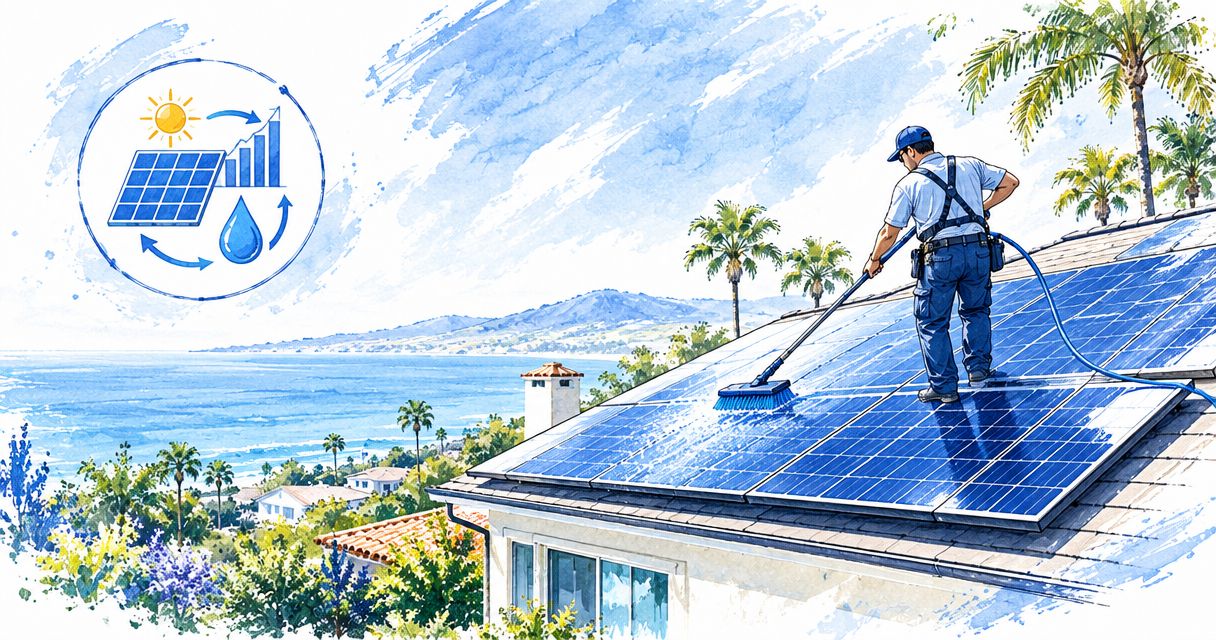
Coastal Santa Barbara homes should clean solar panels when persistent buildup calls for it, following the panel manufacturer’s care instructions rather than a fixed calendar. Salt film, hillside dust and bird droppings deserve attention, but a drop in electricity production alone does not prove your panels need washing.
- How often should you clean solar panels in Santa Barbara? Let buildup and manufacturer instructions set the schedule.
- Coastal salt film and hillside dust make checking panel condition more useful than copying a neighbor’s cleaning calendar.
- Lavare offers solar panel cleaning for Santa Barbara homeowners who want local exterior-cleaning help.
- Check weather, shade and system alerts before treating lower solar production as a cleaning problem.
Why this matters
A recurring appointment is easy to remember. It is not proof that your panels need cleaning on that date. A roof near the shoreline and a sheltered property farther inland do not necessarily collect the same deposits, even within Santa Barbara.
Use a condition-based cleaning plan in 2026, not an unsupported visits-per-year rule. You want to remove meaningful buildup without unnecessary roof access or a method that conflicts with your equipment’s instructions. For help assessing the work, Lavare offers solar panel cleaning and free in-person quotes for local homeowners.
How often should coastal Santa Barbara homes clean solar panels?
Clean coastal Santa Barbara solar panels when an assessment identifies deposits that need removal under the manufacturer’s care instructions. Between cleanings, check what you can safely see from the ground and review your monitoring system for changes that need investigation.
There is no single calendar interval that accounts for every roof’s exposure, panel layout and cleaning requirements. The useful question is whether your panels need cleaning now, not whether another house cleans more often.
| What you find | Best for | Benefit of this approach | Limitation |
|---|---|---|---|
| No obvious buildup or unexplained production change | Continued observation | Avoids scheduling solely because a date arrives | Ground-level views do not reveal every part of an array |
| Persistent film, droppings or accumulated debris | A cleaning assessment | Focuses attention on an identifiable condition | Appearance alone does not measure lost electricity production |
| Lower production without a clear surface problem | System checks before booking | Keeps weather, shade and equipment issues in the picture | Monitoring data alone does not identify the cause |
| Damage, an electrical warning or suspect wiring | A qualified solar technician | Directs a system concern to the appropriate professional | An equipment assessment is separate from routine cleaning |
Treat this table as a decision aid, not a roof inspection. You do not need to climb onto the house to decide that a professional assessment is the safer next step.
Build a repeatable decision process
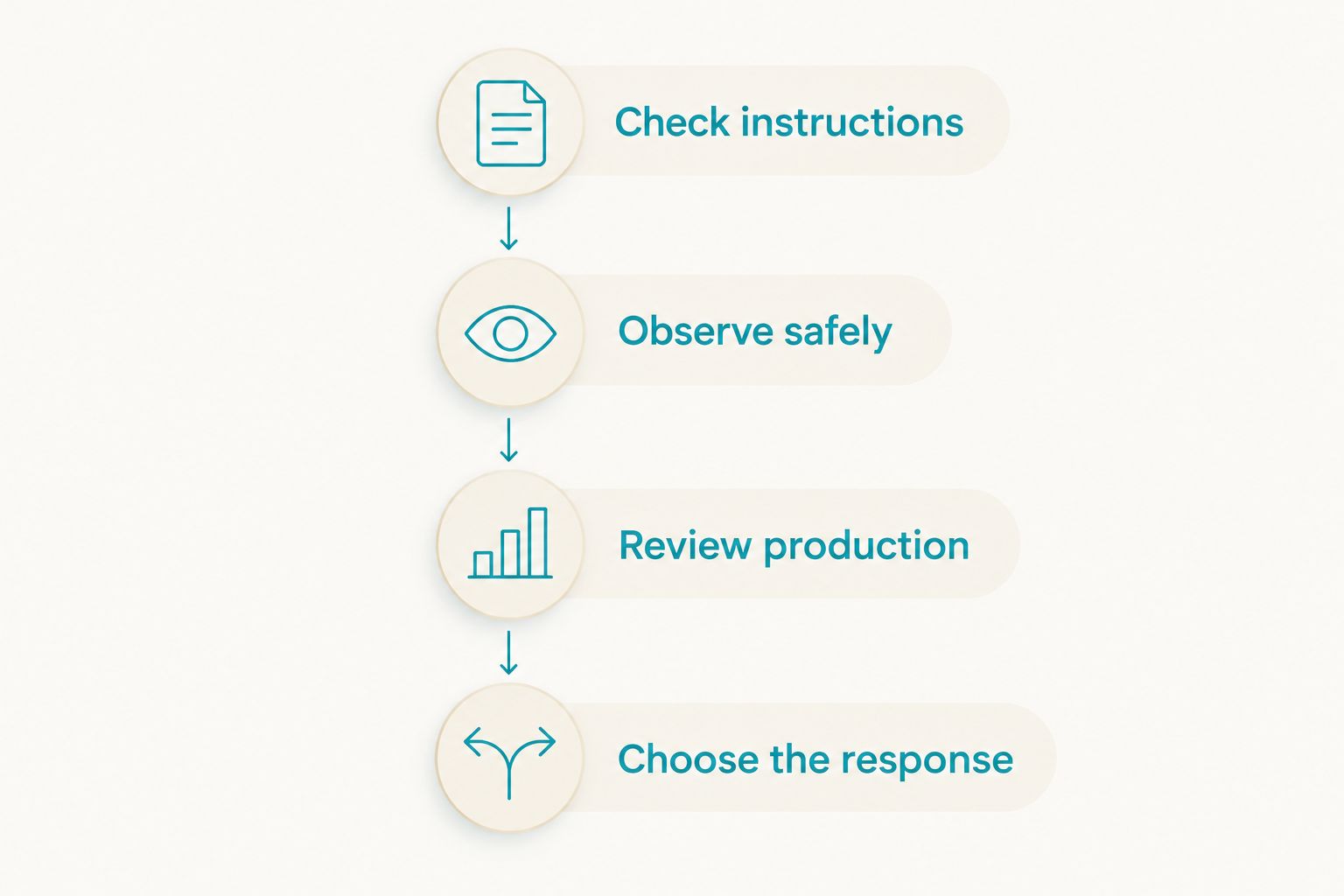
- Check instructions. Find the care guidance for your installed panels. Note any restrictions on water, tools, cleaning products and access.
- Observe safely. Look from an accessible ground-level position for obvious deposits. Do not climb onto the roof for a closer photograph.
- Review production. Check your monitoring information alongside weather, shade and system alerts. Keep cleaning on the list of possible explanations, not the only explanation.
- Choose the response. Continue observing, request a cleaning assessment or contact a solar technician according to what you find.
This process gives your 2026 maintenance plan a clear trigger. It also creates a useful record: the condition you noticed, the action taken and whether the concern remained afterward.
Why solar panel cleaning frequency varies
Coastal exposure matters, but your address alone does not determine the schedule. Use the conditions around your own array to decide when to look again and what to discuss during an assessment.
- Salt exposure. Coastal salt film is a relevant concern near the ocean. Ask whether the visible deposit needs cleaning rather than assuming every coastal property needs the same interval.
- Dust exposure. Hillside dust and nearby soil disturbance give you reasons to check panel condition. A dusty patio is a prompt to look, not proof that the array needs washing.
- Trees and birds. Nearby branches, leaves and bird activity deserve attention when you inspect from the ground. Localized deposits need a different assessment from a faint, even film.
- Rain and dry weather. Rain can move loose material, but it does not establish that every deposit has disappeared. Check the result rather than automatically cancelling or booking service.
- Panel layout and access. Roof pitch, array position and safe reach affect how the work can be assessed and performed. They do not justify taking shortcuts to reach dirty glass.
- Manufacturer requirements. The instructions for your installed equipment govern the method. Do not substitute a general exterior-cleaning routine for panel-specific guidance.
For a Mesa homeowner, coastal film might be the first concern to discuss. For a hillside property, dust might draw attention first. These are illustrative situations, not reports of particular jobs or evidence that one neighborhood needs more appointments.
Does rain replace solar panel cleaning in Santa Barbara?
Rain does not guarantee clean solar panels. It can rinse away some loose dust, while adhered deposits can remain after the roof dries.
Judge the panel condition after rain, not the rainfall itself. From a safe viewing position, look for deposits that remain visible. If you cannot see the array clearly, do not turn that uncertainty into a reason to climb onto the roof.
Rain also changes solar production because cloud cover changes the sunlight reaching the array. A lower reading during cloudy weather is not evidence that rain has made the panels dirtier. Keep the weather and the cleaning question separate.
For your 2026 maintenance notes, record whether the concern remained after the weather cleared. That observation is more useful during a quote conversation than simply saying the house has had rain recently.
Can solar monitoring tell me when to book cleaning?
Solar monitoring can help identify a change worth checking, but it cannot establish dirt as the cause by itself. Weather, seasonal sunlight, shade and equipment issues also affect production.
Start with the system’s own alerts and the conditions on the days you are comparing. Comparing a clear day with an overcast day does not isolate the effect of surface buildup. Neither does comparing different seasons without considering the change in available sunlight.
Then connect the readings with what you can safely observe. A production concern alongside visible deposits gives you something specific to discuss. A production concern alongside an equipment alert needs technical attention rather than an assumption that washing will solve it.
After cleaning, keep checking the original concern. A clean surface is not a diagnosis of the electrical system. If the problem remains, contact the appropriate solar service professional instead of booking repeated cleaning visits without a reason.
Should I clean solar panels myself or book a professional?
Professional assessment is the better next step when you cannot safely reach or evaluate the panels from an appropriate working position. A homeowner’s maintenance plan should not depend on walking across roof tiles or stretching from a ladder.
For any cleaning method, start with the panel manufacturer’s instructions. Do not assume pressure washing, household glass cleaner or a tool used elsewhere around the house is suitable for solar panels. Avoid directing water at electrical components or touching damaged equipment.
The benefit of professional cleaning is practical help with the exterior-cleaning task. Its limit matters too: hiring a cleaner does not replace an electrician or solar technician, and the service should not be treated as a promise of a particular energy increase.
Lavare is a local solar panel cleaning option for homeowners in Santa Barbara, Montecito, Ojai and Ventura. Ask the local crew how they will assess access, follow the equipment’s care requirements and protect the surrounding property before work begins.
What to confirm before requesting a quote
A useful quote starts with the condition of the array and the work you want assessed. You do not need technical measurements or a rooftop photograph to begin the conversation.
Tell the cleaner what you have noticed. Persistent spots, visible droppings and a monitoring alert are different concerns. Describe them separately so an exterior-cleaning request does not conceal an equipment problem.
Before agreeing to the work, confirm:
- Scope: Which panels and surfaces are included, and what remains outside the cleaning visit?
- Access: How will the crew reach the array without you having to prepare an unsafe route?
- Method: How will the proposed tools, water and products fit the panel manufacturer’s instructions?
- Existing concerns: What happens if the crew notices damage or an area that needs technical assessment?
- Follow-up: How should you report a concern about the completed cleaning?
You can also ask about window cleaning while discussing exterior care. Lavare offers both services, but confirm each scope separately rather than assuming a solar appointment includes windows, screens or tracks.
The company’s promise is to return and make it right if you are unhappy. That is a service follow-up commitment, not a guarantee of a particular electricity reading after cleaning.
Request a free in-person quote
Discuss solar panel condition, safe access and the cleaning scope for your home.
Keep a simple solar care record
Your 2026 solar care record does not need to be complicated. Save the manufacturer’s care instructions, note the date of an assessment or cleaning, and record the condition that prompted it.
If you have a safe ground-level view, photographs from the same position can help you describe visible changes. Keep monitoring notes separate from surface observations. That makes it easier to explain whether you are asking about dirty panels, changing production or both.
After a visit, note what was cleaned and any concern left unresolved. You are building a history for your own home, not trying to establish a cleaning rule for the whole coast.
Let that history guide the next assessment. A recurring reminder can prompt you to check conditions without automatically committing you to another cleaning appointment.
FAQ
How often should I clean solar panels near the beach in Santa Barbara?
Use panel condition and manufacturer care instructions to set the cleaning schedule. Coastal salt exposure is a reason to check for deposits, not proof that every beachfront home needs the same cleaning interval.
Should I book solar panel cleaning after every dusty day?
Do not book cleaning solely because a day was dusty. Check safely for persistent buildup and consider the panel manufacturer’s guidance before deciding on service.
Will rain wash bird droppings off my solar panels?
Rain does not guarantee that bird droppings will wash away. If deposits remain, request advice on a suitable cleaning method rather than scraping them off or climbing onto the roof.
Does lower solar production mean my panels are dirty?
Lower solar production does not establish that panels are dirty. Check weather, shade and equipment alerts alongside any visible buildup before choosing between cleaning and technical service.
Can I use my pressure washer on solar panels?
Do not assume a pressure washer is suitable for your solar panels. Follow the installed equipment’s cleaning instructions and have the proposed method checked before work begins.
Can I request solar panel and window cleaning together?
You can ask about solar panel and window cleaning in the same quote request. Confirm the scope, access requirements and scheduling for each service rather than assuming they are included together.
What should I tell a solar panel cleaner before booking?
Describe the visible deposits, access concerns and any production issue separately. Share the panel manufacturer’s care instructions and flag known damage or electrical warnings before cleaning is arranged.
One last thing
Do not judge a cleaning visit by whether production rises the following day. Different sunlight conditions make that comparison unreliable as a standalone test. Check the agreed cleaning scope, then investigate any continuing system concern on its own terms.
For the rest of 2026, make the reminder on your calendar say “check panel condition” rather than “wash panels.” That small change keeps the decision tied to your home, your equipment and the deposits actually present.