
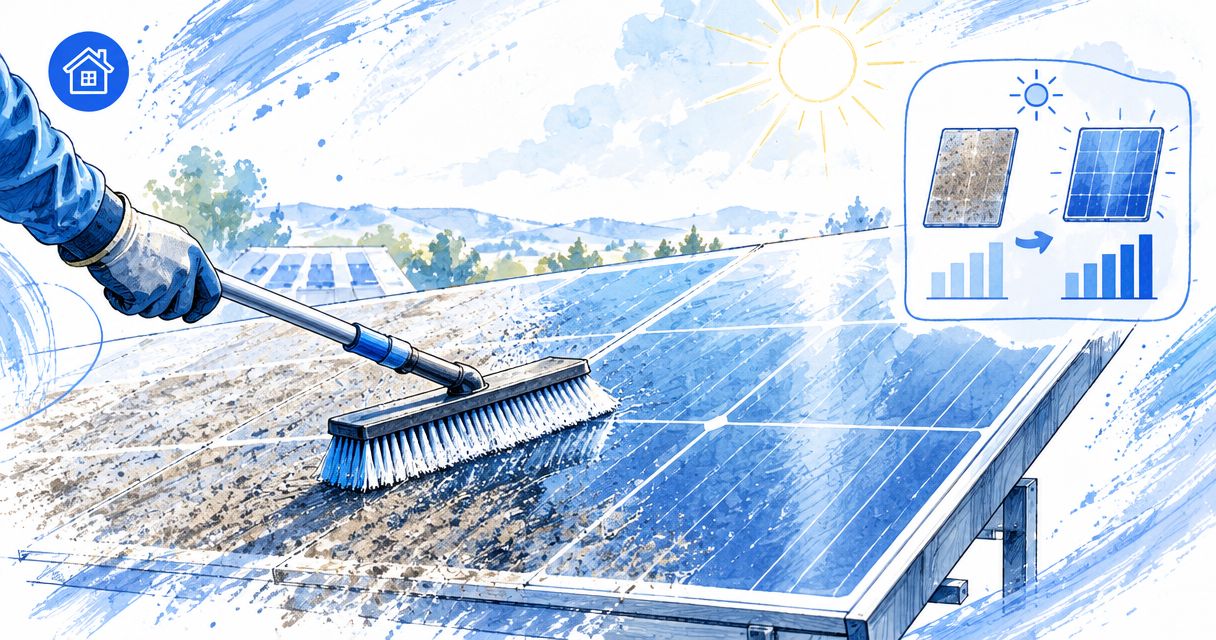
Yes. Dirty solar panels produce less electricity when dust, bird droppings or other deposits block sunlight from reaching the cells, but cleaning only addresses surface dirt—not shade, equipment faults or changes in weather.
- Dirty solar panels’ energy output falls when deposits block sunlight; appearance alone cannot measure the loss.
- Compare solar monitoring records under similar conditions before blaming dirt for lower production.
- Lavarecleans solar panel cleaning serves homeowners in Santa Barbara, Montecito, Ojai and Ventura.
- Choose cleaning for surface buildup and a qualified solar technician for electrical faults.
Why this matters
A dusty panel and an underperforming solar system are not automatically the same problem. Cleaning removes an obstruction on the glass. It does not repair wiring, remove permanent shade or make a cloudy day sunny.
Lavarecleans is best for homeowners seeking local solar panel cleaning in Santa Barbara, Montecito, Ojai and Ventura. You can request a free in-person quote through Lavarecleans. The local crew’s role is careful exterior cleaning, not electrical diagnosis.
For your 2026 home maintenance plan, start with the production record rather than the electricity bill alone. A bill reflects household consumption as well as solar generation, so a higher bill does not establish that the panels need cleaning.
Can dirty solar panels lower energy output?
Yes—surface deposits reduce the sunlight available to solar cells. The effect depends on what covers the glass, how much is covered and how the array responds to uneven sunlight. A light dusting and concentrated bird droppings are different conditions, even when both are called dirty panels.
There is no defensible loss percentage you can assign to your roof from a ground-level glance. Use the visible condition as a reason to investigate, then use monitoring records and an appropriate inspection to narrow the cause.
| Possible cause | What to check | Appropriate next move | Limit of cleaning |
|---|---|---|---|
| Surface buildup | Dust, droppings or film visible from a safe location | Assess whether cleaning is needed | Cleaning addresses deposits, not other causes |
| Tree or building shade | Shadows crossing the array | Discuss shading with your solar provider | Washing does not remove shade |
| Weather and season | Cloud cover, daylight and comparable production periods | Compare similar conditions | A clean array still responds to changing sunlight |
| Equipment problem | Monitoring alerts, an offline inverter or an abrupt production change | Contact a qualified solar technician | Cleaning does not repair electrical equipment |
More than one cause can be present. A dirty array can also have an equipment fault. Do not let an obvious layer of dust end the investigation if the monitoring system shows an alert.
How do you check whether dirt is affecting your panels?
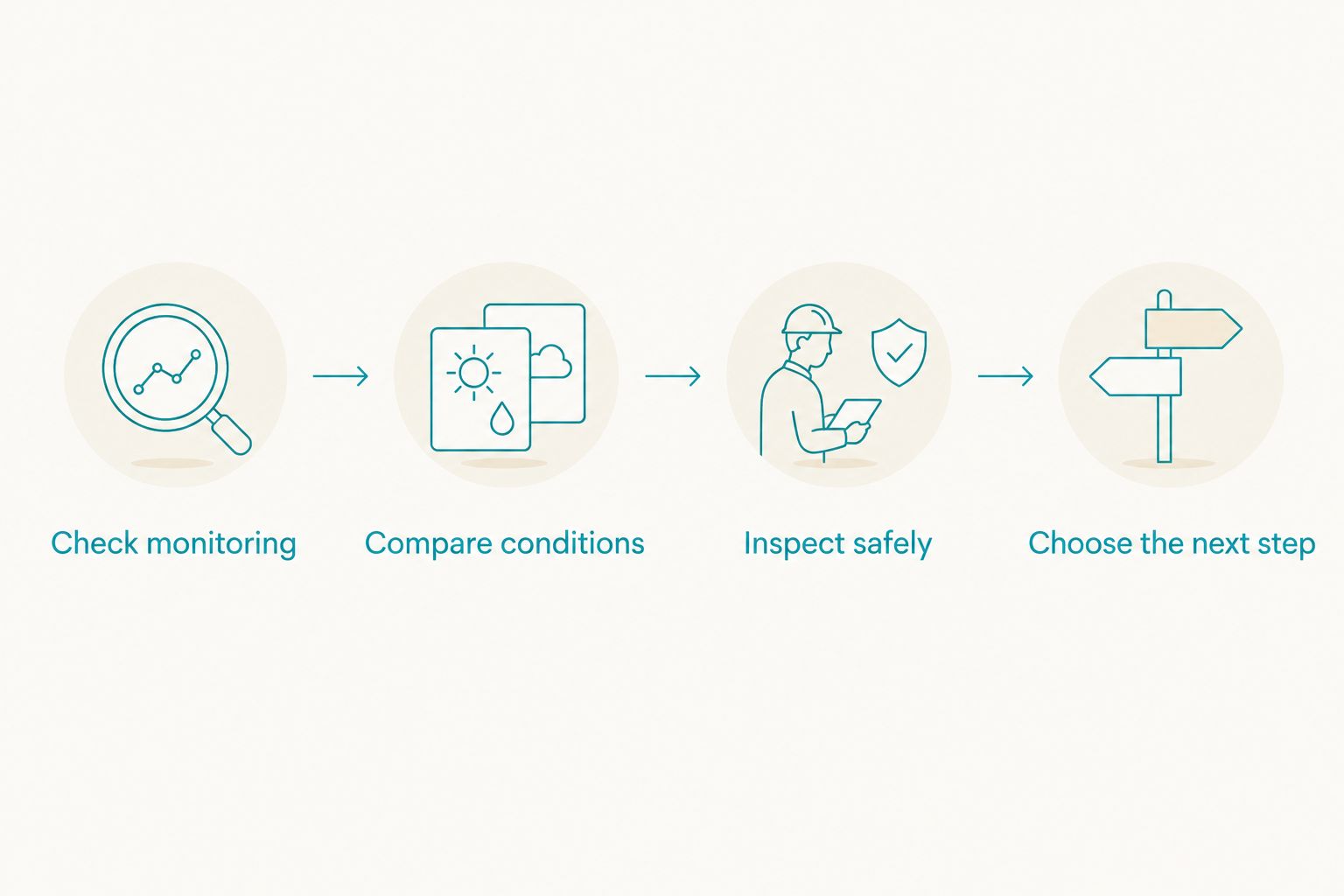
Use a short sequence that separates observation from diagnosis. You do not need to climb onto the roof to begin, and you should not open electrical equipment to investigate a cleaning question.
- Check monitoring. Confirm that the monitoring system is reporting and look for equipment alerts. Missing data is not the same as missing generation.
- Compare conditions. Look at production during similar weather and seasons. A sunny summer day is not a fair benchmark for a cloudy winter day.
- Inspect safely. Look from the ground or another safe location for visible deposits and new shading. Do not walk on panels or lean out of windows.
- Choose the next step. Arrange a cleaning assessment for surface buildup. Send alerts, unexplained shutdowns or persistent underperformance to your solar provider.
Save the cleaning date alongside your 2026 monitoring records. If you compare production afterward, keep weather, shading and equipment status in view. An increase after cleaning is useful information, but a sunnier day can also explain an increase.
Why the effect of dirty solar panels varies
The amount of dirt is only part of the picture. These factors explain why the same cleaning schedule does not fit every home:
- Coverage. A deposit covering a small patch and a film spread across the glass obstruct sunlight differently. Visible dirt alone does not establish the total production loss.
- Type of buildup. Loose dust, coastal salt film and adhered bird droppings do not behave identically. The removal method must suit the deposit and the panel manufacturer’s instructions.
- Rain exposure. Rain can move loose material, but it is not proof that every deposit has washed away. Check the condition rather than assuming the array is clean.
- Surroundings. Trees, nearby dust sources and exposure to coastal air affect what lands on the glass. An Ojai hillside home and a coastal Santa Barbara home need their own assessments.
- System design. Panel layout and electrical configuration affect the response to uneven sunlight. A cleaning provider should not promise a fixed production gain without evidence for that system.
For a 2026 cleaning decision, focus on the condition of your array rather than a blanket neighborhood rule. Nearby homes do not necessarily share your roof exposure, trees or equipment.
Will rain clean solar panels well enough?
Rain can wash away loose dust, but it does not guarantee the removal of adhered deposits. Treat rain as weather, not as a completed cleaning inspection. Look at what remains after the surface has dried.
That distinction matters around coastal salt film and bird droppings. A wet panel can look different from a dry panel without telling you whether the obstruction has gone. Check safely from the ground and avoid judging the result while rain is still on the glass.
The guide to whether rain replaces professional solar panel cleaning explains the decision in more detail. The practical question is whether deposits remain—not simply whether it rained recently.
Does cleaning guarantee higher solar production?
No. Cleaning removes surface deposits; it does not guarantee a measurable increase in every system or under every set of conditions. If dirt was not the main restriction, washing the glass will not address the main cause.
Ask any cleaning provider to separate the cleaning result from an energy promise. Clean glass is something you can inspect. A claimed production improvement needs a fair comparison, not a photograph or a single favorable reading.
If output stays low after cleaning, review the monitoring system and contact your solar provider as appropriate. Repeated washing is not a substitute for identifying shade, reporting problems or equipment faults.
What does safe solar panel cleaning involve?
Follow the panel manufacturer’s cleaning instructions before choosing tools, water or cleaning agents. Solar equipment is not the same cleaning surface as a driveway. Do not transfer a pressure-washing approach to the roof because it worked on concrete.
A cleaning assessment should address access, visible condition and the permitted cleaning method. Roof height, slippery surfaces, fragile materials and electrical equipment all belong in that conversation. If access is unsafe, the answer is not to improvise.
Ask these questions before you book:
- Will the proposed method follow the panel manufacturer’s instructions?
- How will the crew reach the panels without stepping on them?
- What happens if the crew sees damaged glass or exposed wiring?
- What does the cleaning scope include, and what falls outside it?
- How will you review the finished work from a safe position?
Damaged panels and exposed wiring need qualified attention, not a cleaning attempt. Keep household members away from the affected area and contact the appropriate solar professional.
For your 2026 appointment, make those expectations clear before work begins. A useful quote defines the cleaning task without presenting the crew as an electrical repair service.
How should you choose a local cleaning service?
Choose a provider that explains the work plainly and respects the boundary between cleaning and repair. You need a clear scope, an appropriate method and an honest answer about access—not a promised energy gain that nobody has measured.
Lavarecleans solar panel cleaning is part of its residential exterior cleaning service, alongside windows, gutters and pressure washing. Its local crew serves Santa Barbara, Montecito, Ojai and Ventura. If you are unhappy with the work, the promise is to return and make it right.
The service is a fit when surface cleaning is the task. It is not a replacement for a solar installer or qualified electrical technician when your monitoring system reports a fault. Keep those responsibilities separate when arranging visits.
At the free in-person quote, point out visible buildup, access concerns and any areas you cannot assess from the ground. Share equipment instructions you already have. Ask what the crew can safely clean and how the finished work will be checked.
Request an in-person quote
Discuss solar panel buildup, safe access and the cleaning scope at your home.
What should you record before and after cleaning?
Keep a simple record of the cleaning date, visible condition and monitoring status. Add observations about weather and shade so you do not mistake a change in conditions for a cleaning result. Photographs help document surface condition when taken from a safe location.
Use energy production when comparing total generation over a period, rather than confusing it with an instantaneous power reading. Monitoring apps commonly distinguish energy in kilowatt-hours from power in kilowatts. Check the app’s labels before comparing screenshots.
Your 2026 record does not need to be elaborate. A dated note and comparable monitoring views are more useful than a claim that the panels looked brighter. If you share the record with your solar provider, include alerts and interruptions as well as the cleaning date.
FAQ
Can a thin layer of dust reduce solar panel output?
Yes, dust reduces output when it blocks sunlight from reaching the cells. The visible thickness alone does not tell you the size of the loss on your system.
How much energy am I losing from dirty solar panels?
You cannot determine your energy loss from appearance alone. Review comparable production records and rule out weather, shade and equipment problems before assigning the change to dirt.
Should I clean my solar panels when my electricity bill rises?
A higher electricity bill alone is not a reason to clean solar panels. Check solar production and household electricity use separately, then assess whether surface buildup needs attention.
Is rain enough to keep solar panels clean?
Rain can remove loose dust, but it does not guarantee that adhered deposits are gone. Check the dry surface from a safe location rather than assuming rainfall completed the job.
Can I use a pressure washer on solar panels?
Do not use a pressure washer unless the panel manufacturer explicitly permits that method. Follow the manufacturer’s cleaning instructions and leave unsafe roof access to an appropriately equipped professional.
Who should I call if solar production stays low after cleaning?
Contact your solar provider or a qualified solar technician if production remains unexplainedly low after cleaning. Share monitoring alerts, comparable production records and the cleaning date.
How often should I arrange solar panel cleaning?
Base cleaning on the panel manufacturer’s guidance, actual buildup and safe access rather than a universal schedule. Check the condition after changes in local exposure, such as noticeable dust or accumulated bird droppings.
One last thing
A cleaner-looking panel and a better-performing system are different results. Judge cleaning by the removal of deposits and careful treatment of the equipment. Judge generation through monitoring records read in context.
Before your next appointment, save a monitoring screenshot and note whether the system shows any alerts. That small step keeps a surface-cleaning decision from becoming a guess about the whole solar system.