
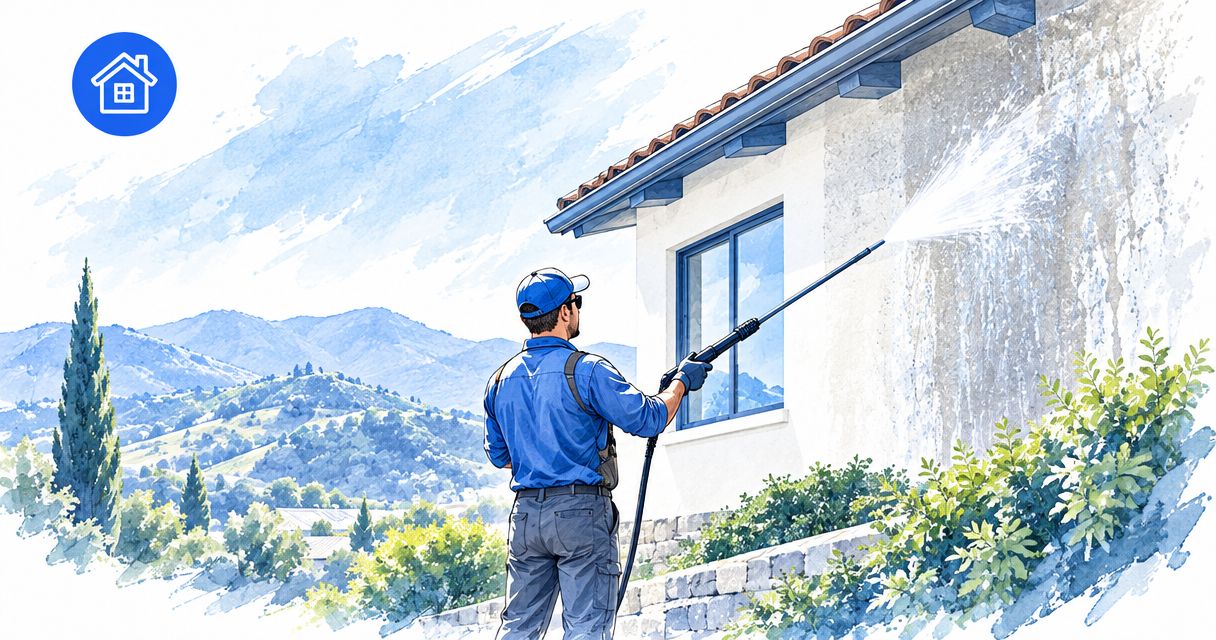
Best overall for an Ojai hillside home: surface-matched washing with controlled runoff. Best for sound concrete: a surface cleaner. Best for delicate finishes: low-pressure washing. Best for tight details: hand cleaning. This 2026 guide explains where each method belongs—and where to stop.
- For best pressure washing methods Ojai hillside homeowners should choose by surface condition, access and runoff—not maximum pressure.
- Use a surface cleaner only on suitable, sound hardscape; keep aggressive washing off fragile finishes.
- Low-pressure washing suits delicate exterior finishes when the material and cleaning product allow it.
- Lavarecleans offers pressure washing in Ojai; request a free in-person quote to discuss your home's surfaces.
Why this matters on an Ojai hillside
A hillside property needs more than a clean driveway. Water follows the grade, hoses cross steps, and a dirty patio can sit directly above planting beds. The cleaning plan needs to account for all of it.
Lavarecleans is best for Ojai homeowners seeking a local pressure-washing service with a free in-person quote. Lavarecleans provides exterior cleaning for homeowners in Ojai, Santa Barbara, Montecito and Ventura, with a promise to return and make it right if you are unhappy.
For your 2026 cleaning plan, start with the surface—not the machine. Hillside dust, leaf debris and attached growth need different treatment. More pressure is not a substitute for identifying what is on the surface and whether the finish can tolerate cleaning.
What makes the best hillside washing method
Use these criteria before choosing equipment or comparing quotes:
- Material compatibility: The method must suit the concrete, coating, stone, wood or siding being cleaned.
- Surface condition: Loose paint, weak mortar, cracks and failing sealers change the plan. Cleaning does not repair them.
- Runoff control: Identify where wash water will travel and how it will be collected or contained.
- Safe access: Sloped paving, stairs and hose routes need a workable setup before washing begins.
- Finish quality: Ask how edges, corners and transitions will be cleaned without leaving visible differences.
Make 3 checks before approving work: identify the material, inspect its condition and trace the drainage route. If any answer is unclear, settle it during the walkthrough rather than after the equipment arrives.
Pressure washing methods at a glance
The ranking below separates methods by use case. It is not a claim that every surface on your property needs pressure washing.
| Method | Best for | Standout feature | Key limitation |
|---|---|---|---|
| Surface-matched washing plan | Mixed-material hillside properties | Assigns a suitable method to each area | Requires inspection rather than one setting throughout |
| Surface cleaner | Suitable, sound concrete patios and driveways | Covers broad, flat areas with a rotating cleaning head | Unsuitable for fragile finishes and awkward edges |
| Low-pressure washing | Compatible delicate exterior finishes | Uses cleaning action without aggressive spray force | Product choice and careful rinsing still matter |
| Hand cleaning and gentle rinsing | Details, small areas and loose dust | Keeps treatment focused around sensitive features | Slow for broad areas or firmly attached buildup |
1. Surface-matched washing: best for mixed-material homes
A surface-matched plan combines methods instead of treating the whole property like a concrete driveway. A paved entry, painted wall and timber gate each get a separate decision. On a hillside, the plan also follows the route water takes downhill.
This is the best overall approach because the property—not the equipment—sets the scope. Ask the contractor to mark what will be washed, what needs gentler treatment and what should be left alone until repaired.
Surface-matched washing pros:
- Separates durable hardscape from vulnerable finishes.
- Makes exclusions visible before work begins.
- Connects cleaning decisions to access and drainage.
- Allows targeted work instead of washing everything unnecessarily.
Surface-matched washing cons:
- Requires a closer inspection than a blanket washing request.
- Does not resolve damaged coatings or uncertain material specifications.
Best for: Ojai homeowners with a mix of paving, exterior finishes, steps and planted slopes.
For Lavarecleans pressure washing, use the free in-person quote to walk through those boundaries. Ask which areas need washing and which need another kind of care; do not assume every surface belongs in the same service.
Verdict: Buy a surface-specific scope, not an all-surfaces pressure-washing promise.
2. Surface cleaner: best for suitable concrete hardscape
A surface cleaner uses rotating spray beneath a housing to clean broad paving areas. It suits compatible, sound concrete where the operator can maintain controlled, overlapping passes. Edges and obstacles still need separate attention.
Before a 2026 driveway cleaning, identify coatings, repairs and changes in material. Decorative finishes, exposed aggregate and patched sections need their own assessment; the word concrete alone does not establish a safe method.
Surface cleaner pros:
- Provides a practical method for broad, accessible paving.
- Keeps the cleaning head positioned over the working area.
- Supports consistent passes when operated correctly.
Surface cleaner cons:
- Cannot replace detail work around steps, corners and drains.
- Can damage unsuitable surfaces or leave uneven results with poor technique.
Best for: Suitable concrete driveways and patios with manageable access and a defined wastewater plan.
A steep driveway adds a separate question: where can the operator stand securely while controlling the equipment? A surface cleaner does not make an unsafe slope safe. Keep vehicles, children and pets out of the work zone until the area is ready to use.
Verdict: Buy for confirmed compatible hardscape; skip it on unverified decorative finishes.
3. Low-pressure washing: best for delicate exterior finishes
Low-pressure washing reduces spray force and relies on an appropriate cleaning product where needed. It is a method to assess for compatible painted surfaces and other finishes that should not receive aggressive washing. It is not permission to soak walls, window seals or openings.
Ask what the contractor means by low pressure. The useful answer explains the surface, application, product compatibility and rinse—not just a softer-sounding service name. For more on material selection, see which surfaces need gentle washing.
Low-pressure washing pros:
- Avoids treating delicate finishes like bare concrete.
- Allows compatible cleaning products to do part of the work.
- Supports targeted treatment rather than repeated aggressive passes.
Low-pressure washing cons:
- Cleaning products still require label-compliant use and plant protection.
- Low pressure does not eliminate water-entry or coating-damage risks.
Best for: Compatible exterior finishes where attached grime requires more than a gentle water rinse.
Include 2 test areas when visibly different finishes need assessment: one on each material. That is a planning example, not a universal treatment specification. An acceptable result on painted trim does not establish compatibility with the wall beside it.
Verdict: Buy when the finish permits it; hold when coatings are loose or compatibility is unknown.
4. Hand cleaning: best for details and loose dust
Hand cleaning uses a suitable brush, cloth or other material-compatible tool to focus on a small area. A gentle rinse can remove loose dust where water use is appropriate. Neither method requires treating a delicate detail like a driveway.
Around an Ojai entry, this approach can separate dusty trim from the paving below it. Use it where control matters more than coverage, especially near vulnerable edges or fittings. Confirm the material first; abrasive pads and stiff brushes can also damage finishes.
Hand cleaning pros:
- Keeps treatment focused on the area that needs attention.
- Allows close inspection during cleaning.
- Avoids unnecessary machine washing for loose surface dust.
Hand cleaning cons:
- Takes more effort across large areas.
- A gentle rinse alone will not remove every stain or attached growth.
Best for: Small details, accessible edges and light dust on compatible surfaces.
Do not turn hand cleaning into an unsafe access project. If reaching a detail means leaning from a ladder or standing on wet steps, change the setup or leave it to someone with a suitable access plan.
Verdict: Buy targeted detail work; skip blanket pressure washing for a little loose dust.
Plan the job from the top of the slope down
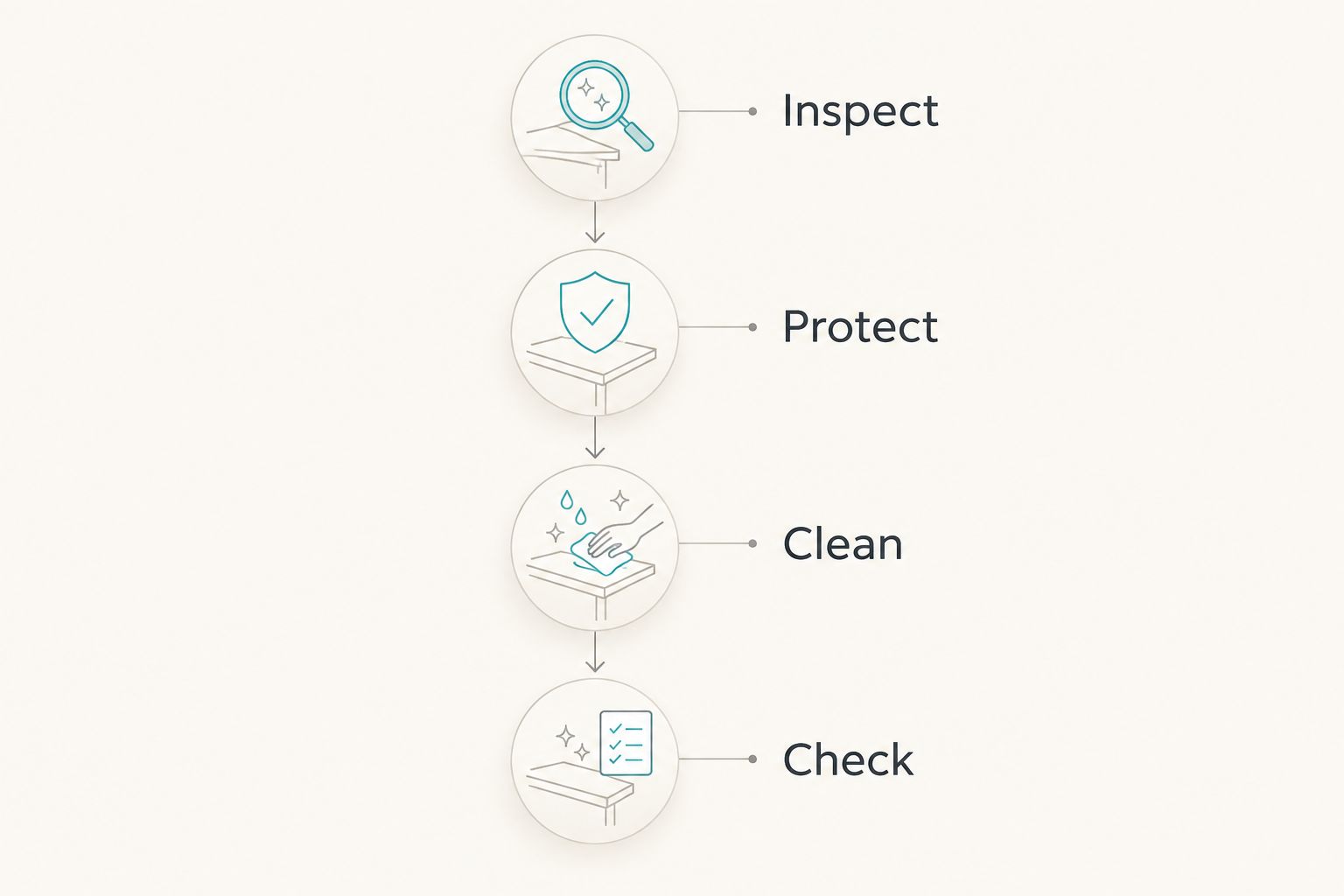
A hillside washing plan has 4 stages: inspect, protect, clean and check. This sequence gives you a practical way to discuss the work without trying to prescribe equipment settings yourself.
Inspect
Walk the property with the contractor. Point out previous repairs, peeling coatings, leaking windows and places where water collects. Identify the surface beneath the dirt before choosing treatment.
Protect
Move outdoor furniture and identify electrical fixtures, vents, door thresholds and sensitive planting. Agree on hose routes and pedestrian access. Ask how wastewater will be kept out of storm drains and handled under applicable local requirements.
Clean
Start only after the drainage and access arrangements are settled. Keep adjacent materials in mind: cleaning paving beside a timber door does not make the door part of the paving job. Avoid pushing debris into drains or down onto a lower terrace.
Check
Inspect the work once surfaces are dry enough to assess. Look at boundaries, corners and transitions between materials. Raise any concerns while the scope and conditions are fresh.
What your pressure-washing quote should explain
For a 2026 quote, ask for a clear scope rather than a promise to make everything look new. Cleaning can remove suitable surface contamination; it cannot reverse weathering, repair cracks or restore a failing finish.
Your walkthrough should settle these points:
- Included areas: Name the driveway, paths, patios or other agreed surfaces.
- Excluded areas: Identify fragile materials, existing damage and repair work.
- Method selection: Establish where machine washing, low-pressure treatment or hand cleaning belongs.
- Runoff handling: Confirm the collection or containment approach before work starts.
- Access: Discuss gates, stairs, parked vehicles and hose routes.
- Final review: Agree on how you will inspect the finished work and report concerns.
Lavarecleans provides pressure washing alongside window, solar panel and gutter cleaning, plus holiday lighting. If you also want windows cleaned, discuss the order during the quote so nearby washing does not undo finished glass work. Window cleaning remains a separate scope, not an assumed part of washing the patio.
Request an in-person quote
Walk through your Ojai home's surfaces, access and cleaning priorities with the local crew.
How these methods were ranked
The ranking prioritizes material compatibility, surface condition, runoff control, safe access and finish quality. It compares methods by appropriate use, not by unverified performance claims or maximum machine output.
Surface-matched planning ranks first because it decides where the other methods belong. The remaining options fill distinct roles: broad hardscape, delicate finishes and small details. None is a universal replacement for the others.
Which method should you choose?
Choose a surface-matched plan as your default. Add a surface cleaner only where the hardscape supports it, use low-pressure treatment where the finish allows it, and reserve hand cleaning for focused work.
For an Ojai hillside home in 2026, the deciding question is not how hard the machine sprays. It is whether the contractor can explain what each surface needs and where the wash water will go. Get those answers before approving the job.
FAQ
What's the best pressure washing method for an Ojai hillside home?
A surface-matched washing plan is the best starting point for an Ojai hillside home. Choose treatment for each material and settle access and runoff handling before cleaning begins.
Is a surface cleaner better than a pressure-washing wand?
A surface cleaner suits broad, compatible hardscape, while a wand allows more targeted work. Neither is automatically safe for every surface, and both require appropriate operation.
Should painted exterior walls be pressure washed?
Painted exterior walls need a finish-specific assessment before washing. Loose coatings, vulnerable openings and manufacturer instructions can rule out aggressive pressure or require another approach.
Can I pressure wash a steep driveway myself?
Do not pressure wash a steep driveway unless you can maintain secure footing and control the equipment safely. Wet paving, hoses and downhill runoff need an access plan before work starts.
Will pressure washing remove every driveway stain?
Pressure washing does not remove every driveway stain or reverse damage. Identify the stain and surface first, then agree on realistic cleaning expectations before treatment.
Should windows be cleaned before or after nearby pressure washing?
Plan nearby pressure washing before the final window cleaning so splash does not dirty finished glass. Confirm the sequence and separate service scopes during the quote.
Does Lavarecleans offer pressure washing in Ojai?
Lavarecleans offers residential pressure washing in Ojai, along with window, solar panel and gutter cleaning and holiday lighting. Request a free in-person quote to discuss the surfaces, access and work you want included.
One last thing
Inspect the downhill side before you look at the dirty surface. A clean patio is not a complete result if dirty water has been sent onto another terrace or into a planting bed. Ask where the water ends up; the answer should be specific.