
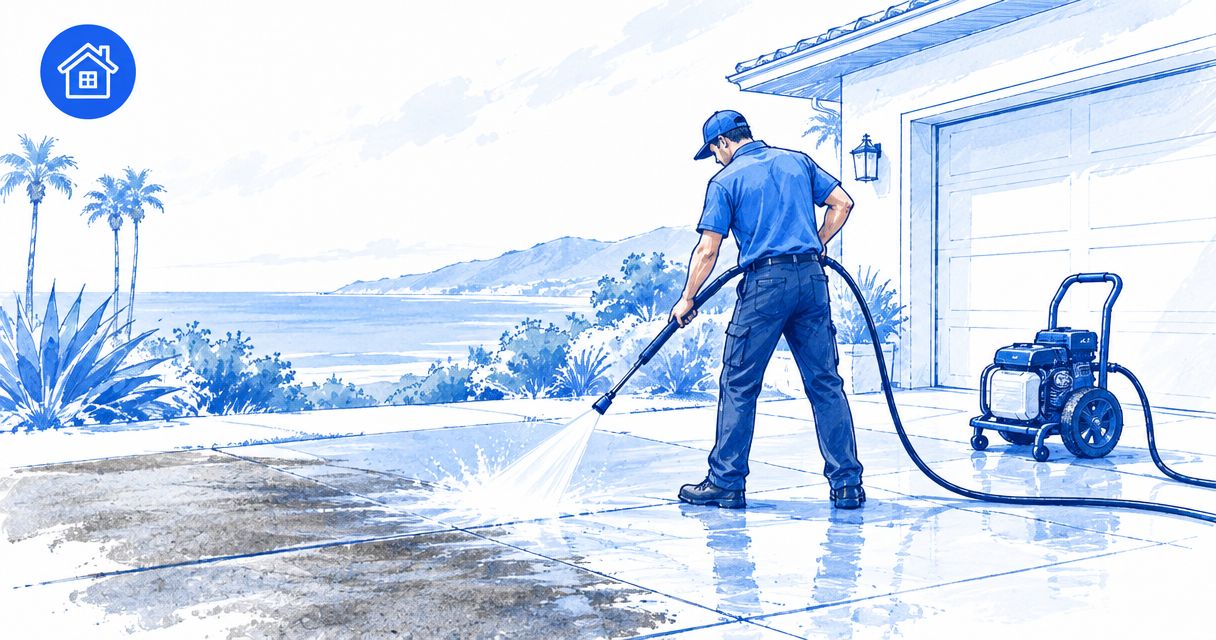
Best overall: surface-cleaner washing for sound concrete. Best for oil-stained concrete: targeted pretreatment before washing. Best for jointed pavers: controlled washing that protects the joints. This guide compares five driveway-cleaning approaches for Santa Barbara homeowners; Lavarecleans is best for homeowners seeking a local exterior-cleaning service with a free in-person quote.
- Best pressure washing techniques Santa Barbara driveway guide: match the method to the material, not the machine’s maximum pressure.
- Surface-cleaner washing is the default recommendation for broad areas of sound, uncoated concrete.
- Oil stains need targeted treatment; more pressure alone is not the answer.
- Lavarecleans offers local exterior cleaning and a free in-person quote for homeowners considering driveway cleaning.
Why this matters
A driveway is not always one uniform surface. Concrete, patched areas, decorative finishes, paver joints and nearby garage trim need different treatment. A method that cleans the main parking area can damage an edge or disturb loose material.
For Santa Barbara homes, start with what is actually on the driveway: hillside dust, tracked soil, fallen leaves or vehicle drips. Coastal salt film on nearby windows is a separate cleaning issue, not a reason to increase driveway pressure. The best driveway-cleaning method in 2026 is the least aggressive approach that removes the identified dirt without damaging the surface.
What makes the best driveway pressure-washing technique?
Judge each technique against these criteria before choosing equipment:
- Surface compatibility: Identify concrete, pavers, asphalt, coatings and decorative finishes before washing.
- Stain suitability: Separate loose dirt from oil, organic growth and discoloration that needs its own treatment.
- Finish control: Look for even cleaning without stripes, gouges or exposed aggregate caused by aggressive washing.
- Joint and edge protection: Keep the method appropriate around sand-filled joints, cracks, thresholds and planting beds.
- Water management: Plan where dirty water goes before starting, rather than chasing it downhill afterward.
Do not treat every hard surface like plain concrete. The guide to Santa Barbara surfaces that need gentle washing is useful when your driveway meets decorative masonry, painted areas or other sensitive finishes.
Driveway-cleaning techniques at a glance
These 2026 recommendations rank methods by their fit for a specific job. They do not rank machines by power, and they do not assume every stain will disappear.
| Rank and technique | Best for | Main advantage | Key limitation |
|---|---|---|---|
| 1. Surface-cleaner washing | Broad areas of sound, uncoated concrete | A consistent cleaning path across open areas | Cannot replace edge work or stain treatment |
| 2. Targeted pretreatment | Oil-stained concrete | Treats the contamination before rinsing | Deep stains can remain visible |
| 3. Controlled paver washing | Sound, jointed driveway pavers | Adjusts the work around joints and edges | Can displace jointing material if handled poorly |
| 4. Low-pressure cleaning | Delicate finishes and weathered surfaces | Reduces reliance on water force | Does not make damaged surfaces safe to wash |
| 5. Hand scrubbing and rinsing | Small, isolated dirty areas | Keeps treatment focused | Impractical for a heavily soiled full driveway |
1. Surface-cleaner washing: best for sound concrete
Surface-cleaner washing uses an enclosed rotating spray assembly to clean a broader path than a handheld wand. For a large, sound concrete driveway, it is the strongest starting choice because the work follows a repeatable pattern. The operator still needs to match the equipment and technique to the concrete.
Inspect for coatings, repairs, loose material and deteriorated edges first. A surface cleaner does not remove the need for a test patch, and stopping over one spot can leave an uneven result.
Surface-cleaner washing pros:
- Suits open parking areas and long concrete sections.
- Supports a more consistent cleaning path.
- Keeps the main cleaning pass organized.
Surface-cleaner washing cons:
- Corners and garage edges need separate attention.
- Oil stains can require pretreatment.
- Unsuitable handling can still mark the concrete.
Best for: Broad areas of sound, uncoated concrete with general dirt buildup.
For your 2026 cleaning plan, request an explanation of how edges, patches and runoff will be handled—not just which machine will arrive. Verdict: Buy this approach for suitable concrete; skip the assumption that every concrete driveway needs the same pressure.
2. Targeted pretreatment: best for oil-stained concrete
Targeted pretreatment addresses an oil spot before the broader wash. The cleaner must suit both the contamination and the driveway material, and its label controls application and rinsing. Pressure is part of the cleanup, not a substitute for the right treatment.
If a vehicle still leaks, address that source as well. Otherwise, cleaning the parking space leaves the cause untouched.
Targeted pretreatment pros:
- Focuses treatment where the stain actually sits.
- Separates stain work from general dirt removal.
- Avoids trying to solve every mark with more pressure.
Targeted pretreatment cons:
- Oil absorbed into concrete can leave a visible shadow.
- An unsuitable cleaner can affect surrounding finishes.
- Contaminated wash water needs careful collection and handling.
Best for: Sound concrete with localized vehicle-oil staining.
Ask whether the quote covers general washing, stain treatment or both. Those are different scopes of work, and the expected result should be clear before cleaning begins. Verdict: Buy targeted treatment for identified oil stains; skip any promise that pressure alone guarantees complete removal.
3. Controlled paver washing: best for jointed driveways
Controlled paver washing treats the paving units and their joints as separate concerns. The goal is to clean the surface without blasting out the material that belongs between the pavers. Inspect movement, damaged units and joint condition before choosing the washing method.
Sealed pavers need another check: confirm what treatment the finish permits. Do not assume an unfamiliar sealer tolerates the same cleaner or pressure as an uncoated paving unit.
Controlled paver washing pros:
- Accounts for joints rather than ignoring them.
- Allows attention to borders and individual dirty areas.
- Makes joint condition part of the cleaning discussion.
Controlled paver washing cons:
- Poor technique can remove jointing material.
- Loose or damaged pavers need attention before washing.
- Joint restoration, if needed, is separate work to clarify.
Best for: Sound, jointed driveway pavers with a cleaning plan matched to their finish.
Before booking in 2026, ask whether the proposed work includes only washing or also any necessary joint follow-up. Do not assume either is included. Verdict: Buy a paver-specific approach; skip a generic concrete-washing plan.
4. Low-pressure cleaning: best for delicate finishes
Low-pressure cleaning relies less on water force and more on an appropriate cleaning process. It belongs in the discussion for sensitive coatings, decorative surfaces and areas where forceful washing is unsuitable. The material and any manufacturer instructions still decide what is safe.
Low pressure is not permission to use any chemical. It also cannot repair flaking concrete, failing coatings or loose material; those conditions need assessment before cleaning proceeds.
Low-pressure cleaning pros:
- Reduces reliance on aggressive water force.
- Provides an alternative for compatible delicate finishes.
- Encourages separate treatment of vulnerable areas.
Low-pressure cleaning cons:
- Cleaner compatibility still matters.
- Heavy staining can remain after gentle treatment.
- Deterioration can rule out washing altogether.
Best for: Sensitive driveway finishes that permit a gentler cleaning method.
Ask for a small, inconspicuous test area and inspect it after drying. A wet surface is not a reliable preview of the finished appearance. Verdict: Buy a material-approved gentle approach; wait if the surface is deteriorating.
5. Hand scrubbing and rinsing: best for small dirty patches
Hand scrubbing keeps a small cleanup focused. Sweep away loose debris, choose a brush and cleaner compatible with the surface, then manage the rinse water. This is a practical first option when the rest of the driveway does not need washing.
For example, a small patch of tracked soil near a side gate does not automatically justify pressure-washing the whole parking area. That is an illustrative situation, not a claim about a completed local job.
Hand scrubbing and rinsing pros:
- Limits work to the affected area.
- Offers direct control near vulnerable edges.
- Avoids unnecessary whole-driveway washing.
Hand scrubbing and rinsing cons:
- Requires more physical effort across larger areas.
- Does not guarantee removal of absorbed stains.
- Abrasive brushes can mark unsuitable finishes.
Best for: Small, isolated dirty patches on a compatible surface.
Use this method for a contained task, not as an obligation to scrub a full driveway by hand. Verdict: Buy the spot-cleaning approach for small patches; skip it for extensive buildup.
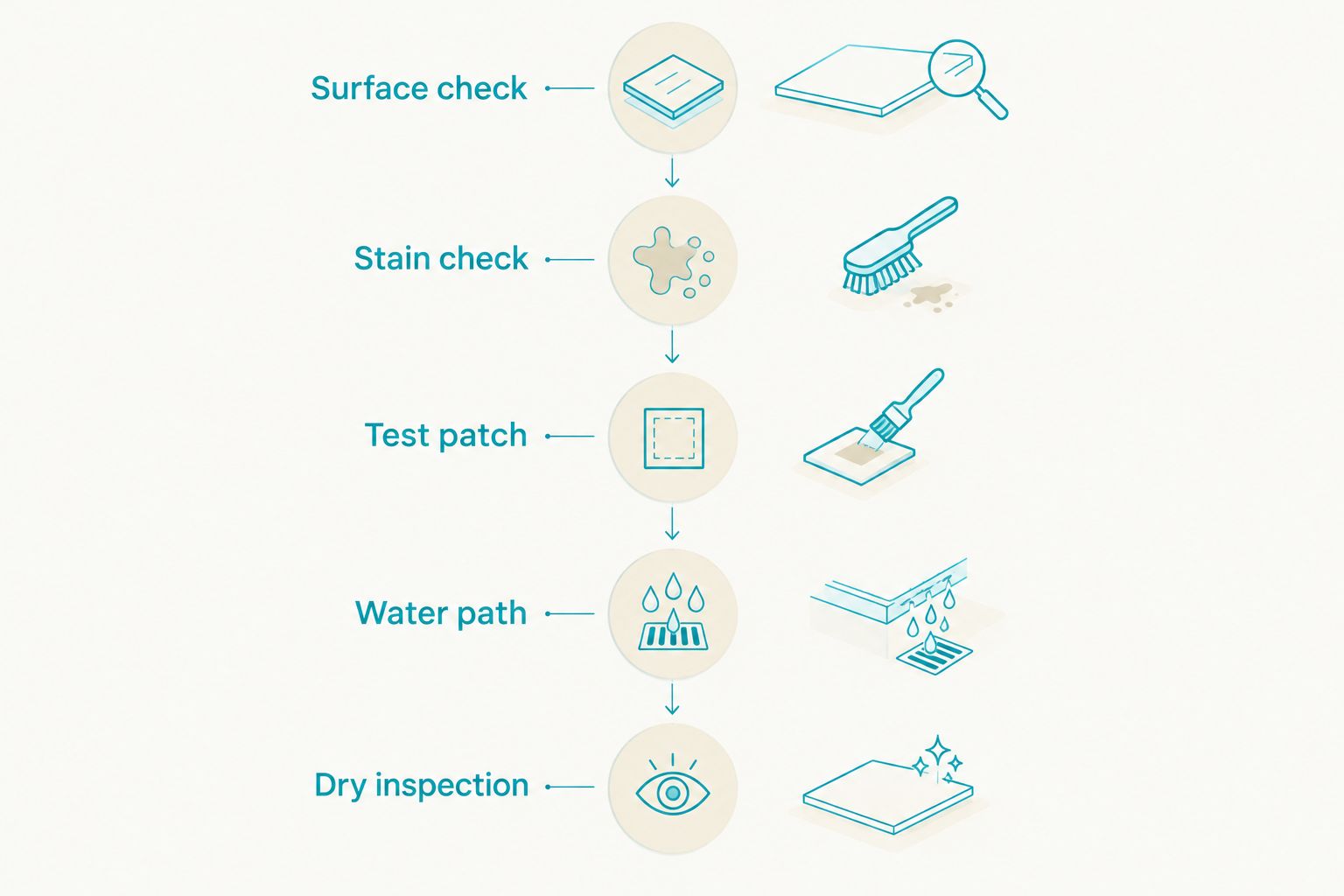
Before washing: check the surface, stain and water path
Use this sequence when discussing the work with a contractor. You should leave the conversation knowing what will be cleaned, what needs separate treatment and what condition could stop the job.
- Surface check: Identify the material, coating, repairs and visible deterioration.
- Stain check: Distinguish loose dirt from oil, organic deposits or unidentified discoloration.
- Test patch: Agree on a discreet area to check the proposed method before broader work.
- Water path: Identify drains, downhill routes, garage openings and nearby planting beds.
- Dry inspection: Review the result after drying before deciding whether a mark needs further treatment.
Keep dirty wash water out of storm drains. Do not plan to push oil, detergent or loosened sediment into the street. Where collection or disposal requirements are unclear, confirm the current local requirements before the work starts.
How these techniques were ranked
Surface-cleaner washing leads because this guide’s default use case is a broad, sound concrete driveway. The other methods win when the material, stain or size of the dirty area changes. A lower-ranked method is the better choice when it fits your driveway.
The criteria are surface compatibility, stain suitability, finish control, joint protection and water management. This 2026 guide is a material-based decision aid, not a report of equipment testing or measured cleaning performance.
Which driveway-cleaning approach should you choose?
Choose surface-cleaner washing for sound, uncoated concrete with widespread dirt. Add targeted treatment for oil. Choose a paver-specific or gentle method when joints, coatings or deterioration change the risk; use hand cleaning when the problem is small.
Lavarecleans provides pressure washing alongside window, solar-panel and gutter cleaning and holiday lighting for homeowners in Santa Barbara, Montecito, Ojai and Ventura. The local crew’s promise is to return and make it right if you are unhappy. Request a free in-person quote so you can discuss the surface and scope before booking.
Request a driveway cleaning quote
Discuss your driveway surface, stains and access during a free in-person quote.
FAQ
What is the best pressure-washing technique for a Santa Barbara driveway?
Surface-cleaner washing is the default recommendation for broad areas of sound, uncoated concrete. Pavers, delicate finishes and oil stains need a method matched to their specific condition.
Should I use the highest pressure to clean my driveway?
No. Use a method appropriate to the driveway material and condition, with a test patch before broad cleaning. More pressure can damage a surface without solving the underlying stain.
Can pressure washing remove every oil stain from concrete?
No. Oil absorbed into concrete can remain visible after cleaning. Ask for stain-specific treatment and a clear explanation of the expected result.
Is pressure washing safe for a paver driveway?
Paver washing requires control around joints, edges and any sealer. Inspect the paving and clarify whether joint follow-up is needed before the work begins.
Should a cracked or flaking driveway be pressure-washed?
Assess damaged areas before pressure washing. Cleaning does not repair failing concrete or coatings, and forceful washing can worsen loose areas.
How should I prepare my driveway for cleaning?
Move vehicles and loose belongings, identify known stains, and point out repairs or coatings. Discuss garage openings, nearby plants and wash-water handling with the contractor.
Does Lavarecleans offer free in-person quotes?
Yes. Lavarecleans invites homeowners to request a free in-person quote for exterior-cleaning work. Use the visit to discuss your driveway material, visible stains and the proposed scope.
One last thing
Do not judge a driveway-cleaning result while the surface is still wet. Water changes its appearance and can conceal remaining marks. Let the test patch dry before agreeing to more aggressive treatment.
For your 2026 maintenance plan, keep driveway cleaning and window cleaning as separate scopes even when you request them together. Ask how nearby glass will be protected from splash, then decide whether the windows need their own cleaning. Clear scope prevents a driveway job from being mistaken for a whole-exterior clean.