
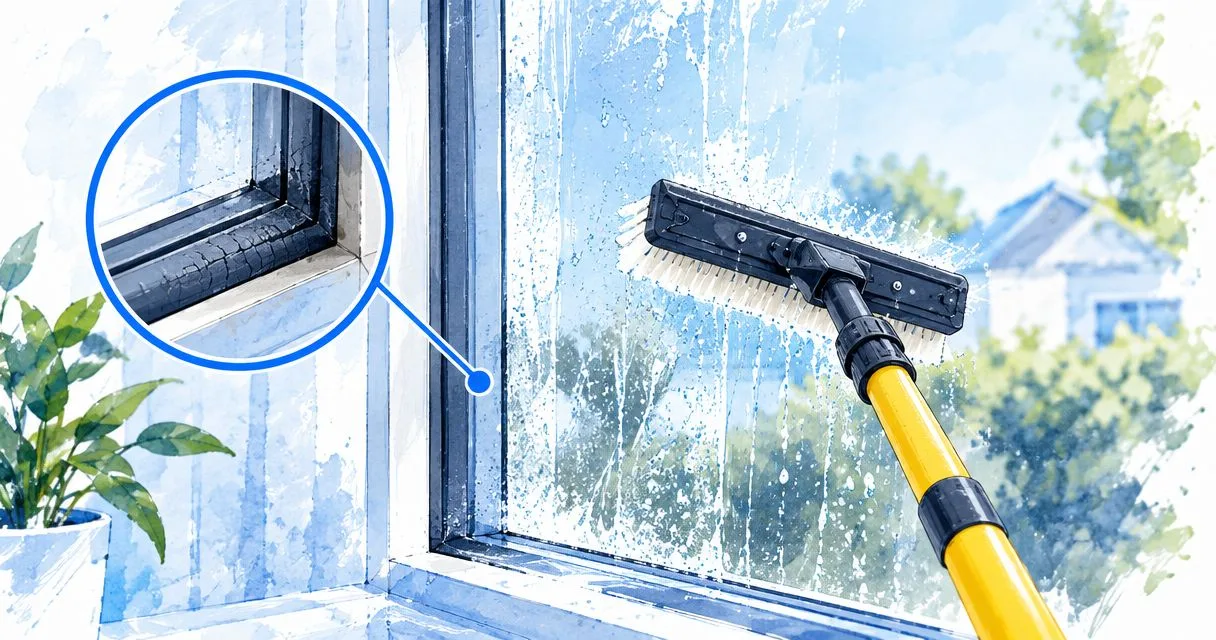
Yes, window cleaning can damage older window seals when forceful spray, incompatible chemicals, or rough handling disturb weakened materials. Gentle cleaning does not repair an existing seal failure, and fog trapped between panes needs a separate assessment. Before your 2026 cleaning appointment, identify loose glazing, cracked sealant, and previous leaks so the cleaning method fits the window’s condition.
- Can window cleaning damage window seals? Yes—forceful spray and rough handling can damage weakened materials.
- Fog between panes is different from dirt on the glass; exterior washing cannot remove it.
- Inspect older frames, glazing, and weatherstripping before choosing a cleaning method.
- Lavarecleans window cleaning is best for local homeowners who want careful work and an in-person discussion of scope.
Why this matters
Older windows need a condition check, not an automatic refusal to clean. A sound older window and a newer window with loose sealant need different treatment. Coastal salt film around Santa Barbara and Ventura, and hillside dust around Ojai and Montecito, also need to be distinguished from damaged glass or failing components.
For 2026 appointments, Lavarecleans serves homeowners in these communities. Explain any past leaks before work begins, even if the window looks dry that morning. The useful question is not simply how old the window is, but what is intact and what is already failing.
Can window cleaning damage older window seals?
Yes. Cleaning can damage weakened window components if the method puts too much force on them or uses a product incompatible with the materials. A concentrated spray directed at joints, aggressive scrubbing against brittle glazing, or pulling on loose weatherstripping creates avoidable risk.
But damage discovered after cleaning is not automatically damage caused by cleaning. Removing surface dirt can make an existing defect easier to see. Fog between panes, for example, is different from a streak left on the outside surface.
Use these distinctions before deciding what happened:
| What you notice | What it points toward | Next move |
|---|---|---|
| A mark wipes off accessible glass | Surface dirt, residue, or condensation | Clean gently and reassess |
| Haze remains between panes after accessible surfaces are clean | A problem within the insulated glass unit | Ask a window professional to assess it |
| Water appears inside during washing | Water entering through the window or surrounding assembly | Stop washing and locate the entry point |
| Glazing or sealant crumbles during contact | Deteriorated material | Stop working on that area and arrange assessment |
These observations guide the next step. They do not establish the cause of a failure on their own.
Which window “seal” are you worried about?
Homeowners often use “seal” for several different components. Separating them makes the conversation with your cleaner or repair specialist much clearer.
Insulated glass edge seals
An insulated glass unit commonly contains 2 or 3 panes separated by a sealed space. Its edge-seal system helps keep moisture out of that space. Persistent condensation between panes is a reason to have the unit assessed; washing the accessible faces cannot clean that enclosed area.
Window cleaning is not insulated-glass repair. If the haze stays in the same place after the inside and outside faces are clean, stop treating it as a stubborn surface stain.
Weatherstripping around moving parts
Weatherstripping helps seal the gaps around an opening sash. Age, wear, or damage can leave it loose, compressed, or brittle. A brush, cloth, or screen frame can catch an already loose section.
Point out detached strips before cleaning. Do not pull them away to make the glass easier to reach, and do not assume pushing them back into place resolves the underlying problem.
Glazing and perimeter sealant
Glazing materials hold and seal glass within certain window assemblies. Perimeter sealant addresses joints around the frame and surrounding construction. Neither is the same thing as the sealed space between panes.
Cracked putty, loose glazing beads, and open perimeter joints call for caution. Avoid scraping, pressing, or directing rinse water into those areas until their condition is understood.
Which cleaning methods suit older windows?
Choose the method after inspecting the window—not before. Window condition, glass instructions, access, and surrounding materials determine what makes sense. No tool makes deteriorated glazing or an active leak safe to ignore.
| Method | Best for | Advantage | Limitation or risk |
|---|---|---|---|
| Hand washing and squeegee work | Accessible glass needing controlled contact | Lets the cleaner work locally and observe edges closely | Still requires care around loose glazing, coatings, and brittle trim |
| Water-fed pole cleaning | Suitable exterior glass reachable from a safe working position | Allows brushing and rinsing without hand access to every pane | Brush contact and rinse water still need control around damaged joints |
| Pressure washing | Appropriate exterior surfaces assessed separately from window glass | Useful for suitable surface-cleaning tasks | Concentrated spray can force water into joints; it is not a substitute for careful window cleaning |
A water-fed pole is not the same as pressure washing. The relevant questions are where the brush touches, where the water goes, and whether the window assembly can tolerate the work.
Deionized water helps limit mineral residue from the rinse water. It does not strengthen a seal, close an open joint, or make damaged windows watertight. For your 2026 booking, ask about the method rather than accepting “pure water” as a complete safety explanation.
Check older windows before cleaning
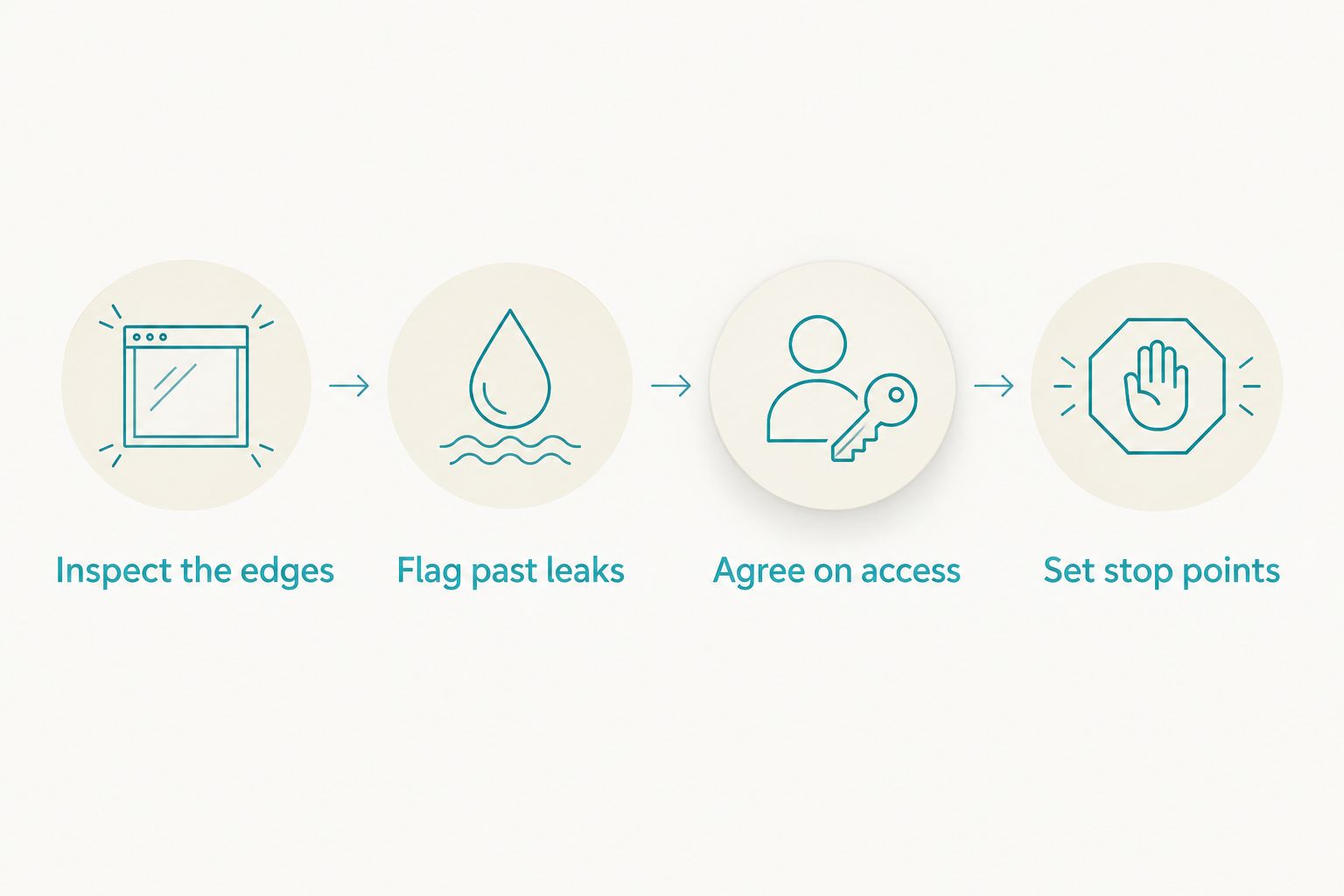
A useful pre-cleaning check covers 3 areas: visible condition, previous water entry, and access. You do not need to diagnose the window yourself. You do need to flag what you have seen.
- Inspect the edges. From a safe position, look for detached weatherstripping, missing glazing, open joints, peeling coatings, or visibly loose parts. Do not probe damaged material to test its strength.
- Flag past leaks. Identify windows that admit water during rain or washing. Mention staining on the sill or wall, and explain when the moisture appears.
- Agree on access. Discuss screens, stuck sashes, delicate trim, and glass that cannot be reached safely. Do not force an old sash open just to complete the cleaning.
- Set stop points. Agree that loose material, unexpected movement, or indoor water entry means stopping that area and discussing the next step.
Take clear photographs of concerns before the appointment. Include a close view and a wider view that identifies the window. Photographs document visible condition; they cannot confirm the health of a concealed edge seal.
Screen handling deserves its own conversation. A stuck screen should not become a reason to pry against fragile trim. Confirm removal and reinstallation before work begins, and identify anything that needs to remain undisturbed.
Why the risk varies between windows
The window’s condition matters more than a blanket rule about age. These factors change the cleaning decision:
- Existing deterioration: Loose glazing, brittle weatherstripping, and open joints need attention before normal cleaning proceeds.
- Water direction: A concentrated stream aimed into a joint creates a different exposure from controlled washing of the glass face.
- Chemical compatibility: Glass coatings, frame finishes, gaskets, and sealants have different care requirements. Follow the applicable manufacturer’s instructions.
- Physical contact: Scrapers, abrasive pads, stiff brushing, and caught cloths can affect more than surface dirt. Do not escalate tools without checking suitability.
- Access: Awkward reaches make controlled work harder. Choose a safe working method rather than stretching or forcing a sash.
- Existing moisture problems: A window with previous indoor leakage needs that history considered before more water is introduced.
Salt film and dust explain why glass needs cleaning. They do not justify stronger chemicals, harder scrubbing, or more force around a damaged frame.
Can you clean windows that already have fog between the panes?
Yes, you can clean the accessible surfaces if the window’s condition allows it, but cleaning cannot remove condensation trapped inside a sealed glass unit. Keep the cleaning decision separate from the repair decision.
Ask a window professional to assess persistent internal haze. Do not drill, open, or attempt to flush the sealed space as part of routine cleaning. A cleaner should also avoid promising that an ordinary wash will restore clarity when the obstruction is between the panes.
Should you postpone cleaning if the sealant is cracked?
Postpone work on the affected area when cleaning would disturb loose material or send water into an open joint. A visible crack is a reason to inspect, not proof that every window on the house must be left dirty.
Ask whether unaffected windows can be cleaned while the questionable area remains untouched. Keep the exclusion specific so you know what was cleaned and what still needs assessment.
What should you do if water comes inside during cleaning?
Stop applying water to that window and protect the interior from further wetting. Tell the cleaner exactly where the water appeared, then document the location before the evidence dries.
Do not repeat the spray to demonstrate the leak. Indoor water can enter through the sash, frame, perimeter joint, or surrounding construction; its appearance alone does not identify a failed insulated-glass seal. Arrange an appropriate assessment before resuming wet cleaning there.
What to confirm before requesting a quote
For a 2026 quote, describe the windows by condition as well as quantity. “Older wood windows with loose glazing at the rear” gives a cleaner more useful information than “all windows need washing.” Mention known coatings or manufacturer care instructions if you have them.
Ask these questions before agreeing to the scope:
- Which windows need a closer inspection before cleaning?
- Will the work include glass, screens, sills, and tracks, or only selected surfaces?
- How will fragile glazing and loose weatherstripping be avoided?
- What happens if water enters or a component moves unexpectedly?
- Which marks are surface deposits, and which need separate assessment?
Lavarecleans window cleaning suits homeowners who want a local crew, careful work, and a clear discussion of scope. The service does not replace window repair. If you are unhappy with the cleaning, the promise is to return and make it right; that is separate from repairing pre-existing defects.
Request a free in-person quote and point out the windows that concern you. A useful quote makes the limits clear before work starts.
FAQ
Can window cleaning damage window seals on an older house?
Yes, forceful spray, incompatible chemicals, or rough handling can damage weakened window components. Inspect loose glazing, weatherstripping, and open joints before choosing the cleaning method.
Does fog between the panes mean the cleaner damaged my window?
No, fog between panes does not establish that the cleaner caused damage. Persistent internal condensation needs a window assessment, and ordinary surface cleaning cannot remove it.
Is a water-fed pole safe for old windows?
A water-fed pole is suitable only when the window’s condition and care requirements allow brushing and rinsing. Loose glazing, open joints, and previous leaks require a separate decision before work proceeds.
Can I pressure wash around older window frames?
Do not direct a pressure-washer jet at older window joints or fragile glazing. Assess nearby exterior surfaces separately and keep window cleaning distinct from pressure washing.
Should cracked window putty be fixed before cleaning?
Loose or crumbling putty needs assessment before cleaning that would disturb it. Leave the affected area untouched rather than scrubbing it or rinsing water into gaps.
Will deionized water repair a failed window seal?
No, deionized water does not repair window seals. It helps limit mineral residue from rinse water but cannot close a failed joint or remove moisture trapped between panes.
What should I tell a window cleaner before the appointment?
Tell the cleaner about previous leaks, loose glazing, damaged weatherstripping, stuck screens, and persistent fog between panes. Point out the exact windows and agree on areas to leave untouched.
One last thing
For your 2026 cleaning plan, mark the questionable window—not the whole house—as needing a decision. That keeps one fragile sash from becoming an excuse either to force the work or abandon otherwise suitable cleaning.
When you speak with Lavarecleans, show the concern before discussing the finish you want. A window left untouched for a clear reason is a better outcome than a clean pane surrounded by disturbed glazing.