

Deionized water helps Santa Barbara windows dry without the mineral residue that ordinary tap water can leave behind. It works best as part of a proper wash and rinse—not as a substitute for removing coastal salt film, hillside dust, or existing hard-water deposits.
- Window cleaning Santa Barbara: deionized water reduces mineral residue, but thorough washing and rinsing still matter.
- Deionized water does not automatically remove old hard-water stains or repair damaged glass.
- Lavarecleans suits local homeowners seeking window cleaning and a free in-person quote.
- Choose the cleaning method around the glass, frames, access, and condition—not the equipment alone.
Why this matters
A window can look clean while wet and show spots once it dries. Water evaporates; dissolved minerals do not. Reducing those minerals in the final rinse helps prevent a fresh layer of residue from forming on the glass.
For your 2026 window-cleaning plans, separate the washing method from the result you expect. Clear glass, clean screens, and tidy tracks are different tasks. A purified-water rinse does not make them interchangeable.
Lavarecleans window cleaning is best for homeowners in Santa Barbara, Montecito, Ojai, and Ventura who want a local crew and an in-person quote. Start with Lavarecleans to discuss the windows and access around your home, rather than choosing a method by name alone.
Why use deionized water for Santa Barbara window cleaning?
Deionized water contains fewer dissolved mineral ions than untreated source water. During deionization, ion-exchange resin removes dissolved ions, including those associated with mineral spotting. A properly purified final rinse therefore leaves less mineral material behind as it dries.
That matters where your windows collect salt film or dust. Washing loosens contamination; rinsing carries it away. Purifying the rinse water addresses another problem: the residue introduced by the water itself.
These methods solve different parts of the job:
| Method | Best for | Main advantage | Main limitation |
|---|---|---|---|
| Deionized-water wash and rinse | Suitable exterior glass with practical brush-and-pole access | Reduces minerals introduced during rinsing | Does not replace agitation or remove every existing stain |
| Conventional wash and squeegee | Interior glass and panes needing direct, controlled cleaning | Removes wash water from the glass rather than leaving it to evaporate | Requires careful technique around edges and frames |
| Untreated tap-water rinse left to dry | Initial rinsing before a suitable finishing step | Helps move loose dirt | Dissolved minerals can remain after evaporation |
Deionized water improves the rinse; it does not perform the whole cleaning job. A clean finish still depends on the condition of the glass, how dirt is loosened, and whether contaminated water is rinsed away.
What deionization changes—and what it leaves alone
Deionization addresses dissolved ions. It is not the same as sterilization, and it does not mean that every type of contaminant has been removed. Do not treat the term as a general promise of purity for every purpose.
For window cleaning, the useful distinction is narrower: fewer dissolved minerals in the rinse means less mineral residue available to dry onto the pane. That is the reason to use it, not a claim that the water repairs glass or prevents future dirt.
Where a deionized-water rinse helps
Exterior glass: less rinse-water residue
On suitable exterior windows, purified water lets the cleaner rinse loosened dirt away without deliberately leaving ordinary tap water to dry. A water-fed brush can combine agitation and rinsing, provided the glass and surrounding materials suit that approach.
The advantage is a reduced risk of fresh mineral spotting. The limitation is that dirty seals, frames, or brush equipment can still introduce contamination. Water treatment cannot compensate for an incomplete wash.
Reachable pole work: a different access option
A water-fed pole can let a cleaner reach some exterior panes from the ground. That changes the access method, but it does not make every high window accessible or eliminate the need to assess the working area.
Landscaping, setbacks, rooflines, overhead hazards, and the angle to the glass all matter. Ask how the cleaner will reach your particular windows. Do not assume that a longer pole makes an awkward location suitable.
Final rinsing: useful after dirt is released
A final rinse works when the dirt has somewhere to go. Brushing first helps release attached contamination; rinsing then carries it off the surface. Simply spraying purified water onto a dirty pane leaves the cleaning process unfinished.
This distinction is especially useful when comparing 2026 quotes. Ask whether the proposed work includes washing the glass or only rinsing it. The water description alone does not answer that question.
Why the finished result varies
A deionized-water system controls the rinse-water minerals. Several other factors determine what you see after the glass dries:
- Glass condition. Existing deposits, scratches, and etched areas are different from ordinary surface dirt. Cleaning cannot reverse every visible defect.
- Surface contamination. Coastal salt film, dust, pollen, and oily marks need suitable cleaning action, not just a change of water.
- Frames and seals. Dirt held above or beside a pane can wash back onto cleaned glass if the surrounding areas are not addressed appropriately.
- Rinse-water quality. Treatment equipment needs monitoring and maintenance. The presence of a filter does not establish the quality of the water leaving it.
- Access and technique. Brush contact, rinse coverage, and the ability to reach edges affect whether contamination is removed.
- Window materials. Coatings, older glazing, damaged seals, and nearby finishes require an approach consistent with their care instructions.
You do not need to choose the cleaner's equipment yourself. You do need a clear explanation of what the method will remove, what it will leave, and how sensitive areas will be handled.
What should a proper wash-and-rinse process include?
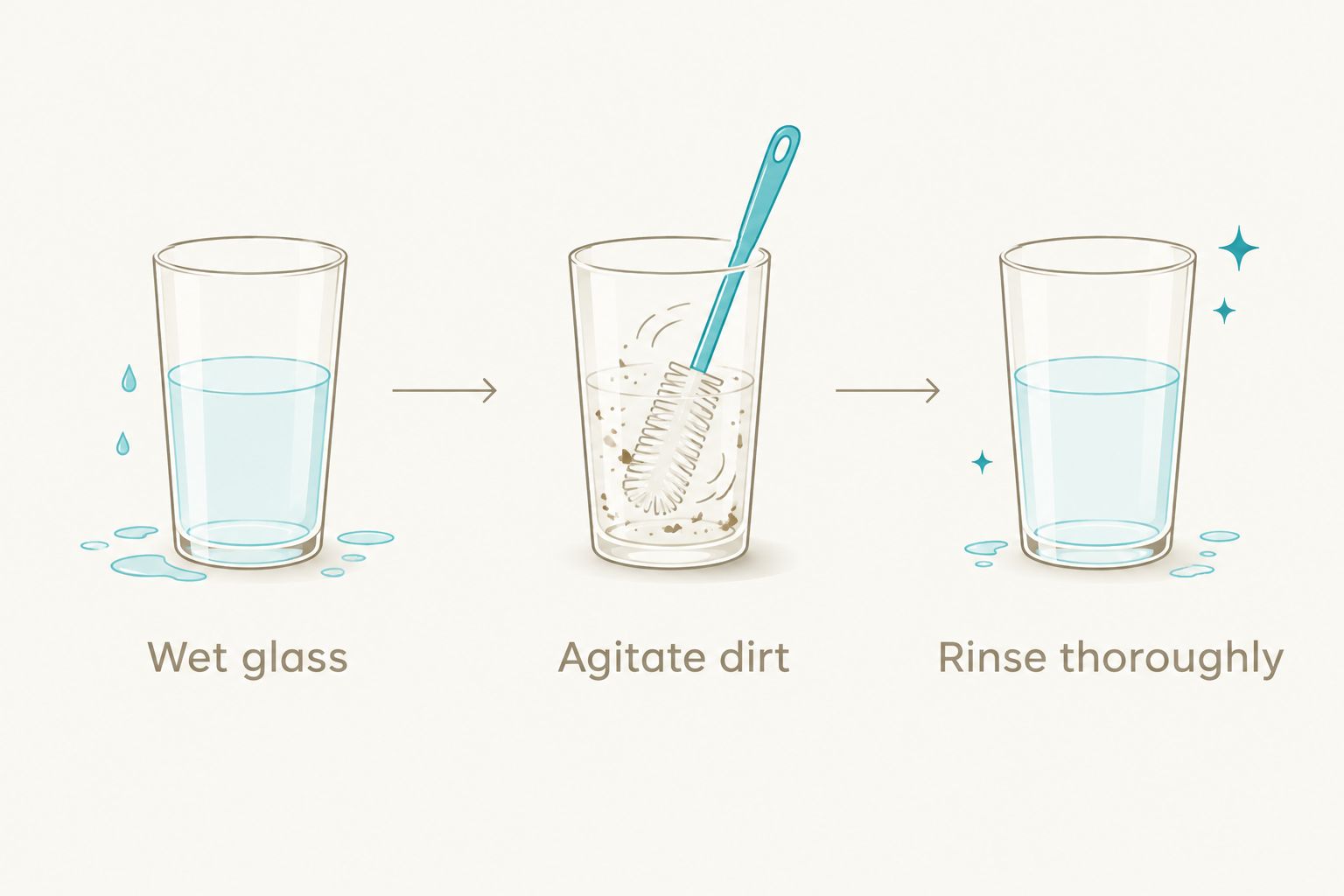
Think of exterior glass cleaning as 3 cleaning stages: wetting, agitation, and rinsing. The exact tools depend on the window. The purpose of each stage stays distinct.
- Wet glass. Wet the surface using a method suitable for the glazing and surrounding materials. Identify visible damage or deposits that need separate attention.
- Agitate dirt. Use appropriate cleaning tools to loosen attached contamination. A rinse cannot reliably carry away material that remains stuck to the glass.
- Rinse thoroughly. Carry loosened dirt away, including contamination near the edges. Avoid introducing dirty runoff onto an already finished pane.
A window that looks clear while wet is not the whole test. Where practical, look at the finished glass after it dries. Fresh spotting, remaining deposits, and scratches can look similar at a glance but require different responses.
For a 2026 appointment, point out problem panes before work begins. A quick conversation about a persistent mark is more useful than expecting every visible blemish to disappear during routine cleaning.
Will deionized water remove old hard-water stains?
Deionized water does not automatically remove old hard-water stains. It limits minerals introduced during rinsing, while existing deposits remain a separate cleaning problem. Some deposits need a glass-safe treatment; permanent surface damage is not removable dirt.
Tell the cleaner which marks remain after previous washes. Also mention irrigation spray that repeatedly reaches the windows. Removing a deposit without addressing its source leaves the same exposure in place.
Avoid experimenting with abrasive pads or strong chemicals on unfamiliar glass. Coatings and finishes can require specific care. Ask for an assessment before treating a stubborn patch as an ordinary cleaning task.
Is deionized water better than a squeegee?
Deionized water and squeegees are different ways to finish suitable glass, not a universal winner and loser. Purified-water rinsing reduces mineral residue when the rinse dries; a squeegee physically removes wash water. Both depend on sound technique.
Inside your home, controlled water use matters around flooring, furnishings, and window trim. Outside, access and the condition of the frames can change the appropriate approach. A cleaner should explain the choice in terms of your windows rather than insist that one tool belongs everywhere.
The strongest question is simple: how will this method leave this pane clean without creating another problem? That keeps the discussion focused on the result and the materials involved.
What should you ask before requesting a quote?
Use 4 quote questions to separate the cleaning scope from the equipment description. These are practical questions for a 2026 booking, whether you have a few accessible panes or windows spread across a hillside home.
- Which surfaces are included? Clarify interior glass, exterior glass, screens, tracks, and sills. Do not assume that a window-cleaning quote includes every surrounding component.
- How will difficult windows be reached? Point out narrow side yards, planting beds, roof windows, and panes above sloping ground.
- Are persistent marks routine cleaning or separate treatment? Identify mineral deposits, paint specks, and other attached material before comparing quotes.
- What happens if something needs attention afterward? Ask how to report a missed area and what the cleaner will do next.
Lavarecleans offers a free in-person quote and promises to return and make it right if you are unhappy. Use that visit to identify the glass you want cleaned and explain any concerns about access or existing marks. Clear expectations make the finished work easier to assess.
Request a free in-person quote
Discuss your windows, access, and cleaning scope with the local crew.
How should you prepare your home?
Preparation is mostly about access and information. Close the windows scheduled for exterior washing. Move fragile items from interior sills when inside cleaning is included, and identify screens or hardware that need careful handling.
Tell the crew about leaks, loose seals, damaged panes, or coatings with special care instructions. A cleaning visit should not become a test of an already compromised window. Keep pets away from the immediate work area and discuss gates or access arrangements beforehand.
For your 2026 maintenance plan, note which windows collect salt film or hillside dust first. Use their actual condition to guide the next conversation about timing. Purified water does not create a protective barrier against the next exposure.
FAQ
Why use deionized water for window cleaning in Santa Barbara?
Deionized water reduces the dissolved minerals that can leave residue when rinse water dries. It supports a cleaner finish when dirt is properly loosened and rinsed away.
Will deionized water remove the salt film on my windows?
Deionized water supports rinsing, but salt film still needs an appropriate wash. Purifying the water does not replace loosening and removing contamination from the glass.
Can deionized water remove old sprinkler stains?
Deionized water does not automatically remove old sprinkler stains. Existing mineral deposits need separate assessment, and etched glass is not the same as removable residue.
Is a water-fed pole safe for every window?
A water-fed pole is not suitable for every window or access situation. The cleaner needs to consider glazing instructions, frames, seals, surrounding materials, and the working area.
Does purified-water cleaning include my screens and tracks?
Purified-water cleaning does not establish whether screens and tracks are included. Confirm each part of the scope when requesting a quote.
How do I know whether the cleaning worked?
Inspect the finished glass after it dries where practical. Ask the cleaner to distinguish remaining dirt from deposits, scratches, or other existing surface damage.
Can I request a free in-person quote from Lavarecleans?
Lavarecleans offers free in-person quotes for homeowners in Santa Barbara, Montecito, Ojai, and Ventura. Discuss access, the surfaces you want cleaned, and any persistent marks during the visit.
One last thing
A spot-free rinse cannot stop the next sprinkler cycle from putting minerals back on your windows. Before booking repeated stain treatment, look at what is reaching the glass between visits. Adjusting an avoidable source of spray can matter as much as choosing the rinse water.
Ask about both parts of the problem: removing what is there now and reducing what returns. That is a more useful maintenance plan than choosing a service solely because it mentions purified water.