

Yes, window cleaning in the rain can be done when rainfall is light, access is safe, and the cleaner can inspect the finished glass. Heavy rain, strong wind, lightning, slippery footing, or dirty runoff are reasons to postpone exterior work—not reasons to assume every rainy appointment is wasted.
- Window cleaning in the rain is reasonable in light rainfall when access and working conditions are safe.
- Rain can carry dirt onto glass, but rainwater and hard-water sprinkler deposits are different problems.
- Lavarecleans provides window cleaning for homeowners in Santa Barbara, Montecito, Ojai, and Ventura.
- Keep interior window cleaning separate from the decision about weather-exposed exterior work.
Can window cleaning be done in the rain?
Light rain does not automatically prevent a good window-cleaning result. The decision depends on conditions at your home, the work involved, and whether the cleaner can safely finish and check it. A forecast icon alone does not settle the question.
Also confirm what the appointment includes. Glass, screens, tracks, and frames are separate parts of the job; the guide to what Ventura window cleaning should include explains the scope to discuss before work starts.
| Conditions or service | Best for | Benefit | Limitation or next move |
|---|---|---|---|
| Light rain with safe access | Routine exterior cleaning | Cleaning can proceed without waiting for completely dry weather | The cleaner still needs to inspect the finish |
| Heavy or wind-driven rain | Rescheduling exposed exterior work | Avoids working through poor visibility and continuing runoff | Exterior work waits for suitable conditions |
| Interior-only cleaning | Keeping indoor work on schedule | Outside rain does not directly wet the indoor glass | Access, open windows, and indoor protection still matter |
| Lightning or unsafe footing | Postponing outdoor work | Keeps safety ahead of the appointment | Do not substitute a different tool for a safe working environment |
Why this matters
A rainy forecast creates two different questions: will the work be safe, and will the glass finish clean? Treat them separately. Safe access comes first; cleaning quality comes next.
For your 2026 home-maintenance schedule, leave room for weather decisions without treating the whole rainy season as off-limits. Waiting for a dry forecast does not remove existing salt film, fingerprints, or hillside dust. Equally, keeping an appointment should never mean asking someone to work through unsafe conditions.
Light rain: keep the appointment conditional
Light rain is compatible with window cleaning when the cleaner can control the process. Washing removes material already on the glass; squeegeeing or a suitable purified-water rinse handles the finish. Rain does not reverse that cleaning simply by touching the pane.
The drawback is visibility. Fresh droplets can make it harder to distinguish remaining dirt from water, especially on shaded windows. Ask how the cleaner will inspect the work rather than asking for an unconditional promise that rain cannot affect it.
Best for: Routine cleaning where safe ground access, manageable rainfall, and a clear inspection method are all available. Let the person assessing your property make the final weather call.
Heavy rain: postpone exposed exterior work
Heavy rain can keep feeding water and dirt down from frames, roof edges, and nearby surfaces. Wind-driven rain also reaches glass beneath overhangs. A window that receives continuing dirty runoff is difficult to finish and assess reliably.
Rescheduling has a practical benefit: the cleaner can work when the result is visible and the site is safer. The downside is the delay. If you are preparing for guests or a property showing in 2026, discuss an alternative date before the forecast becomes the only available planning window.
Best for: Waiting on weather-exposed exterior work when runoff, visibility, or footing prevents a safe, checkable result.
Interior cleaning: consider it separately
Rain outside does not automatically stop interior window cleaning. Indoor fingerprints, cooking residue, and dust remain accessible without exposing the glass to rainfall. You can discuss completing the inside while moving the outside to another appointment.
That split has limits. Open windows can admit rain, wet equipment needs careful handling indoors, and separate visits require coordination. Confirm the revised scope before anyone starts so you know which surfaces will be finished that day.
Best for: Homeowners whose indoor work can proceed safely even when the exterior portion needs to wait. Do not assume a split visit is included; agree on it first.
Why rainy-day window-cleaning results vary
There is no single answer for every elevation of a house. A sheltered window and an exposed hillside pane can face different conditions during the same shower.
- Rain intensity: A light shower leaves different working conditions from sustained heavy rain.
- Wind exposure: Wind directs rain toward glass and makes outdoor equipment harder to control.
- Runoff paths: Water passing over dirty frames, ledges, or roof edges can carry material back onto a cleaned pane.
- Existing buildup: Loose dust, coastal salt film, and mineral deposits require different attention; rainfall does not identify the residue.
- Access and footing: Sloped paths, wet surfaces, overhead electrical hazards, and difficult window positions affect whether work can proceed safely.
- Inspection conditions: Active droplets and poor light can hide streaks or remaining deposits until the surface dries.
For a 2026 appointment, describe these property conditions when booking. They give the cleaner more useful information than a general question about whether rain is allowed.
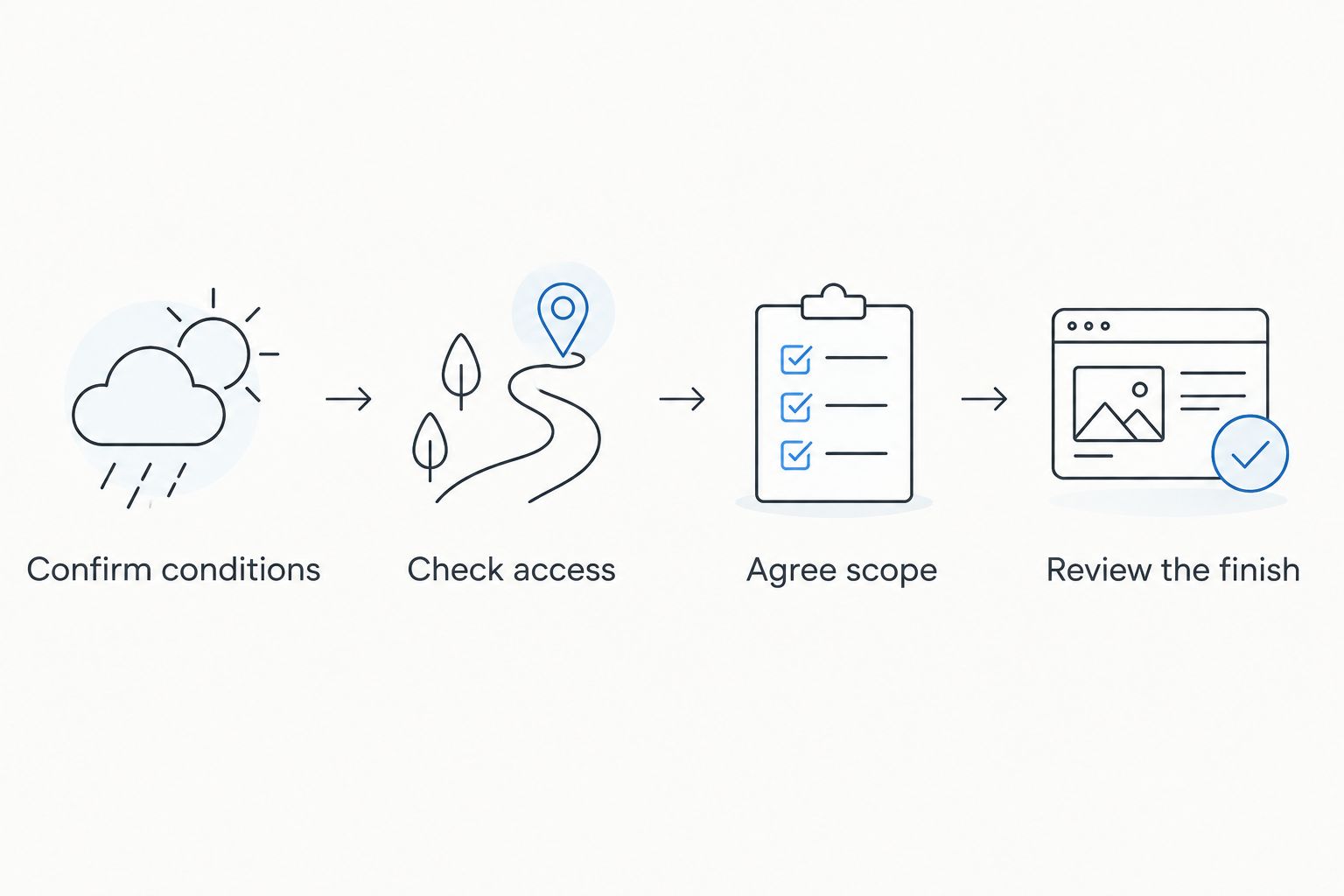
How should you handle a rainy-day appointment?
Contact the cleaner before canceling or assuming the visit will proceed. A short conversation about your property can prevent confusion, especially when the forecast changes overnight.
- Confirm conditions. Share what is happening at the house, including wind, runoff, and wet access routes. Conditions at your address matter more than a regional forecast alone.
- Check access. Mention steep paths, locked gates, difficult upstairs windows, and nearby overhead wires. Leave equipment and ladder decisions to the cleaner.
- Agree scope. Confirm whether the visit includes exterior glass, interior glass, screens, or other surfaces. Discuss any weather-related change before work begins.
- Review the finish. Ask how the cleaner will check the glass and what to do if marks become visible after it dries.
These steps keep the decision tied to the house and the work. They also make it easier to distinguish a weather delay from a change in the service you booked.
Does rain make clean windows dirty again?
Rain can leave marks when airborne material or dirt from surrounding surfaces reaches the glass. Water running across a dusty frame is not the same as water landing directly on a clean pane. The route the water takes matters.
Look at the pattern once the window dries. Trails below a ledge suggest a different issue from a broad film across the glass, though appearance alone does not prove the cause. A photo that includes the frame and surrounding wall gives the cleaner more context than a close-up of one spot.
Do not judge the result while water is still moving across the pane. Visible droplets are not, by themselves, evidence that the cleaning failed.
Are rain spots the same as hard-water stains?
Rain spots and hard-water stains are not interchangeable. Hard-water deposits form when mineral-containing water evaporates and leaves material behind. Sprinkler spray and tap water can create a recurring source even when the weather is dry.
That distinction changes the work. Routine washing removes surface dirt; removing hard water stains requires attention to mineral deposits and the glass or coating beneath them. Do not assume a stronger cleaner or more scrubbing is safe for every window.
If the same marks return near a sprinkler, discuss the water source as well as cleaning. Removing residue without addressing repeated spray leaves the cause in place. Ask whether stain treatment is part of the quoted scope or a separate assessment.
What changes for coastal and hillside homes?
In Santa Barbara and Ventura, coastal salt film belongs in the cleaning discussion. Around Ojai hillsides, dust exposure is relevant. Montecito homes also differ in tree cover, elevation, and how much glass sits beneath an overhang.
Those details do not establish a fixed cleaning interval or guarantee a particular rainy-day result. They tell you what to describe when requesting a quote: which windows get direct weather, where runoff appears, and whether marks return after sprinkler use.
For your 2026 cleaning plan, watch individual windows rather than treating every side of the house alike. A protected entry pane can stay sheltered while an exposed view window receives wind-driven rain. Photograph persistent patterns so the assessment starts with something specific.
When should you request a local assessment?
Request an assessment when access is difficult, deposits remain after ordinary cleaning, or you cannot tell whether marks are inside or outside. Mention damaged seals, loose screens, or known leaks before work begins. Cleaning is not a repair for those conditions.
Lavarecleans is best for homeowners seeking local window cleaning in Santa Barbara, Montecito, Ojai, and Ventura. You can request a free in-person quote through Lavarecleans, discuss the work with the local crew, and identify weather-exposed areas before scheduling.
The service includes a promise to return and make it right if you are unhappy. That is a reason to communicate clearly about the result, not a reason to expect outdoor work during unsafe weather. Ask how to report a concern after the glass dries.
Should you wait until the rainy season ends?
You do not need to wait until the rainy season ends to discuss window cleaning. Schedule around suitable working conditions, the state of the glass, and your household plans. An extended wait leaves existing buildup untouched.
For the rest of 2026, use weather flexibility rather than a blanket seasonal ban. Keep a preferred date and discuss what happens if exterior work needs to move. Do not climb onto a wet surface to do a quick cleanup while waiting.
FAQ
Can window cleaners work in light rain?
Window cleaners can work in light rain when access, footing, wind, and visibility allow safe work and a checkable finish. The cleaner should assess conditions at your property before proceeding.
Will rain ruin windows that were just cleaned?
Rain does not automatically ruin freshly cleaned windows. Dirt carried through the air or washed from nearby frames and ledges can leave marks, so inspect the glass after it dries.
Should I cancel window cleaning if rain is forecast?
Contact the cleaner before canceling a window-cleaning appointment because of rain. A forecast alone does not establish conditions at your house or determine whether interior work can proceed.
Can inside windows be cleaned when it is raining outside?
Interior windows can be cleaned during rain when indoor access and protection are suitable. Confirm whether the cleaner will complete the inside separately from any postponed exterior work.
Does rain remove salt film and dust from windows?
Rain is not a substitute for cleaning salt film and dust from windows. It does not provide the controlled washing, residue removal, and inspection involved in window cleaning.
Why do my windows still have spots after the rain stops?
Spots after rain can come from material left on the glass or carried onto it by water. Persistent sprinkler-related mineral deposits need a different assessment from loose surface dirt.
Can I request a quote before deciding about rainy-weather cleaning?
Lavarecleans offers a free in-person quote for homeowners in Santa Barbara, Montecito, Ojai, and Ventura. Use the visit to discuss access, cleaning scope, recurring marks, and weather-related scheduling.
One last thing
Photograph recurring marks with the whole window frame in view. A close-up shows the spot; a wider photo shows the ledge, sprinkler direction, or runoff path that helps explain it. Share both before booking repeat cleaning for the same problem.