
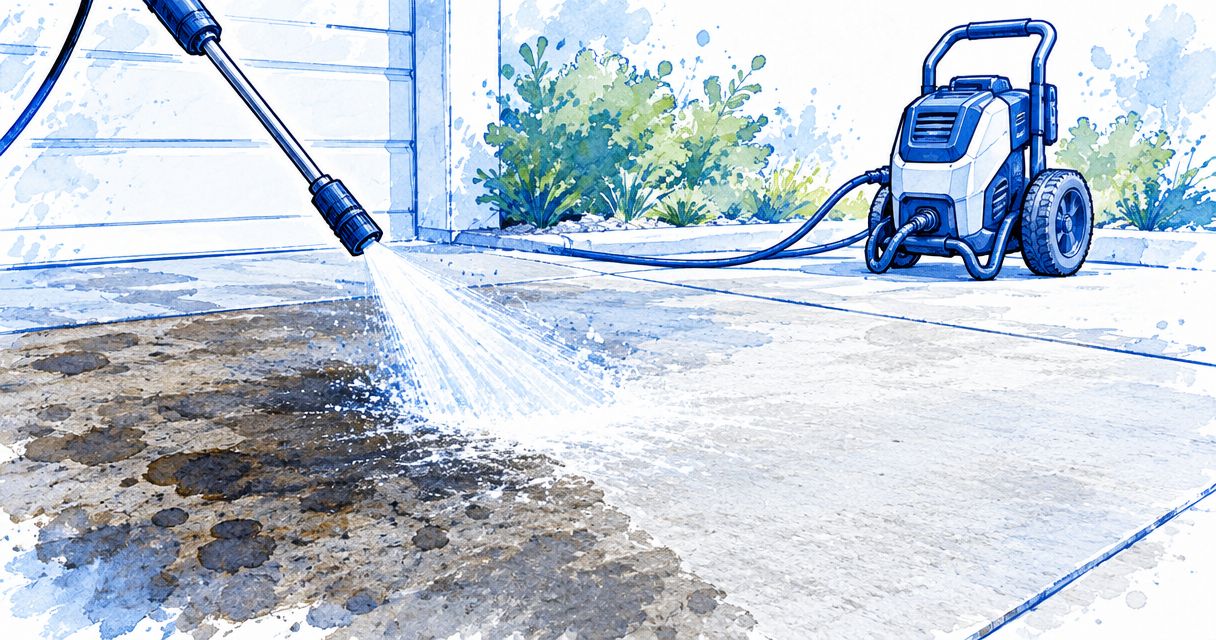
Yes, pressure washing can remove oil stains from concrete, especially when surface oil is absorbed first and a suitable concrete degreaser loosens the residue. Pressure washing alone does not guarantee a clean finish: oil that has soaked into concrete can leave a shadow after washing. The goal is to lift the oil without damaging the concrete or sending oily wash water into the street.
- Can pressure washing remove oil stains? Yes, but absorbed oil can leave a visible shadow on concrete.
- Concrete degreaser helps loosen oily residue; more pressure is not a substitute for proper treatment.
- Lavarecleans serves homeowners in Santa Barbara, Montecito, Ojai and Ventura seeking local exterior cleaning.
- Ask about a test patch, runoff collection and the expected dry result before booking driveway cleaning.
Why this matters: A driveway can look cleaner while an oil mark remains. Before you book Lavarecleans, separate general driveway washing from targeted oil-stain treatment so your quote addresses the result you want.
Can pressure washing remove oil stains from concrete?
Pressure washing removes loose dirt and helps rinse away oil released by cleaning treatment. Concrete is porous, so an older stain is not always sitting on top where a water jet can reach it. That difference explains why washing a dirty driveway and removing an oil stain are not the same job.
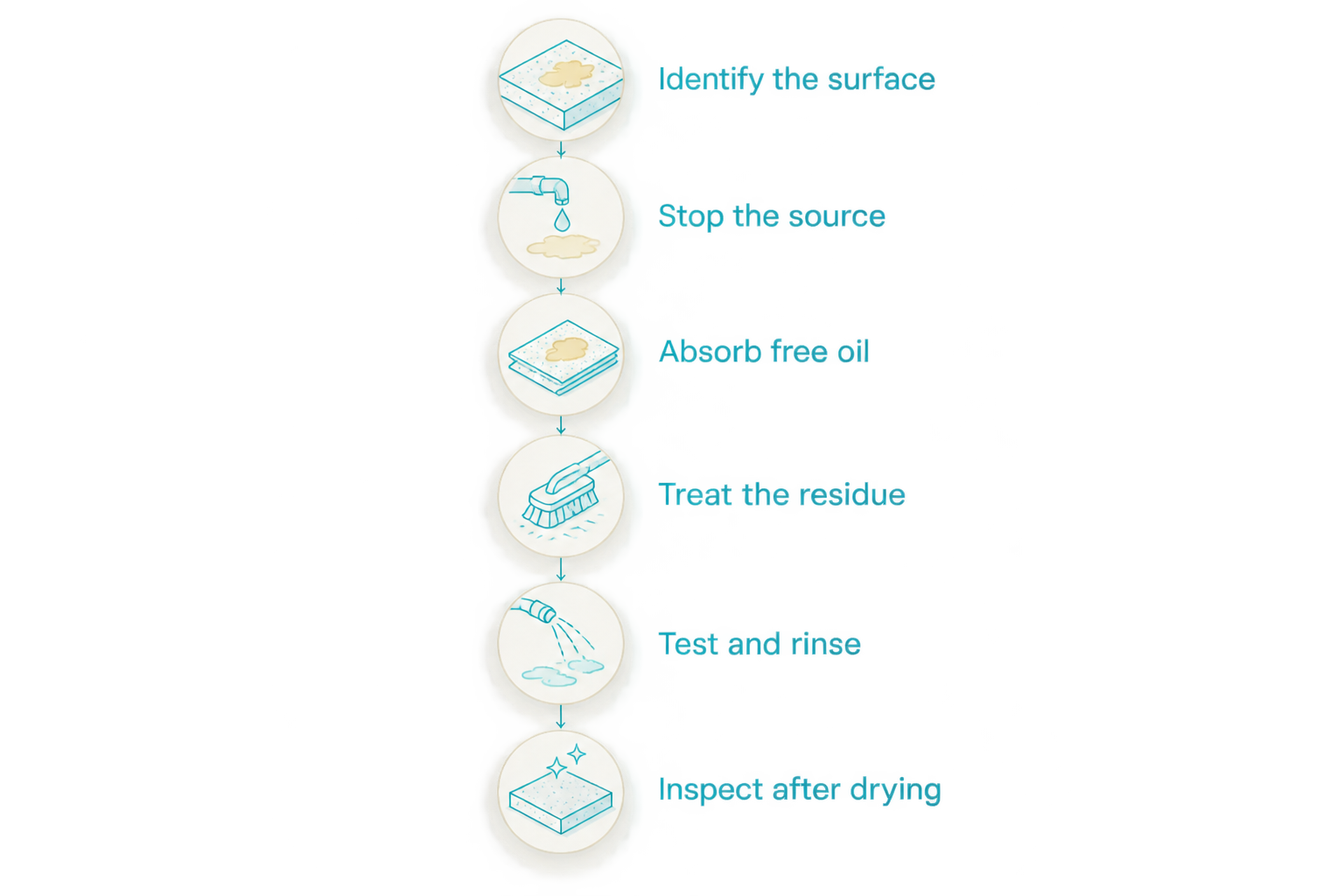
A sensible treatment sequence addresses the oil before the final rinse:
- Identify the surface. Confirm that the driveway is concrete rather than asphalt, and check for coatings, sealers, cracks or loose surface material.
- Stop the source. Move or repair the leaking vehicle or equipment before cleaning the same parking spot again.
- Absorb free oil. Lift pooled oil with an appropriate absorbent rather than washing it across the driveway. Collect the used material for proper disposal.
- Treat the residue. Use a cleaner labelled for oil on the specific concrete surface, following its dilution, application and dwell instructions.
- Test and rinse. Check a small, inconspicuous area before treating the full stain. Keep oily wash water contained and collected.
- Inspect after drying. Judge the remaining mark when the concrete is dry, not while water is temporarily darkening the surrounding slab.
A successful rinse is not proof of complete stain removal. Ask whether the work is intended to remove loose contamination, reduce the visible mark or attempt deeper stain treatment.
Fresh oil: absorb it before washing
Fresh oil gives you an opportunity to remove liquid before more of it enters the concrete. Keep vehicles and foot traffic away from the spill so the oil does not spread into a larger patch.
Use an absorbent intended for oil spills and follow its instructions. Sweep up the saturated material carefully; do not push it toward a gutter or landscape bed. Ask your local waste service how to handle oil-contaminated absorbent.
Best for fresh spills: absorption followed by surface-appropriate cleaning. Absorption removes free liquid, but it does not necessarily remove the oily residue or discoloration underneath. A cleaner can still be needed before rinsing.
Avoid turning a small spill into a broad, thin film with a hose. Water moving downhill carries the contamination with it rather than making it disappear.
Older oil stains: expect a possible shadow
An older oil mark needs different expectations. Oil can penetrate below the concrete surface, leaving discoloration that remains after surface residue has been cleaned away.
A concrete-compatible degreaser can help release oily material. A labelled poultice treatment is another approach for some embedded stains: it uses an absorbent material to draw contamination toward the surface. Neither approach guarantees that the concrete will return to its original color.
Best for embedded stains: a test-led treatment plan, not repeated aggressive washing. The benefit is a more deliberate attempt at stain reduction. The limitation is that the mark can remain, and additional treatment does not promise a matching finish.
Tell the cleaner whether you have already applied detergent, solvent, acid or sealer. That history matters when selecting another treatment and assessing the surface safely.
Which cleaning approach fits an oil stain?
The right approach depends on whether you are dealing with pooled oil, surface residue or an embedded mark. These methods serve different purposes; they are not interchangeable upgrades.
| Approach | Best for | Main benefit | Main limitation |
|---|---|---|---|
| Oil absorbent | Fresh, pooled oil | Removes free liquid before washing | Does not necessarily remove the stain beneath it |
| Concrete-compatible degreaser | Oily surface residue | Helps release oil for collection and rinsing | Requires surface compatibility and label-compliant use |
| Labelled poultice treatment | Localized, embedded discoloration | Targets contamination within porous material | Results vary; a shadow can remain |
| Pressure washing | Rinsing loosened residue and cleaning surrounding concrete | Removes released material and general dirt | Water pressure alone does not reliably remove absorbed oil |
Use the mildest effective method that suits the surface. A stronger jet can strip or roughen concrete without solving the underlying stain. A cleaner that works on bare concrete is not automatically suitable for a decorative finish or coating.
For the wider driveway, see these pressure washing techniques for Santa Barbara driveways. Keep the oil-treatment discussion separate from the general cleaning scope.
Why oil-stain removal varies
A dark spot is not enough information to promise a result. These factors change how the job should be approached:
- Time in contact. Oil left on concrete has more opportunity to penetrate than a spill absorbed promptly.
- Surface condition. Porous, worn or damaged concrete presents a different cleaning problem from sound concrete with an intact compatible coating.
- Repeated leakage. A parking spot exposed to ongoing drips can contain more contamination than a single surface spill.
- Previous treatments. Existing cleaners, coatings and attempted repairs affect what can safely be applied next.
- Access and drainage. Slopes, nearby planting and drain locations affect how the work area and wash water must be managed.
- The expected finish. Reducing an oil mark and restoring a uniform appearance across the driveway are different expectations.
Coastal salt film, hillside dust and ordinary driveway dirt can sit around the oil mark. Cleaning that surrounding dirt changes the contrast, which is another reason to assess the entire area rather than promise a result from a close-up photograph.
Can more pressure get rid of the remaining mark?
More pressure is not a reliable answer to oil absorbed into concrete. It can damage the surface while leaving the deeper discoloration in place.
Watch for a cleaning plan that focuses only on equipment power. Ask instead how the operator will identify the finish, choose the treatment, test the surface and contain the rinse water. Those decisions address the stain and the property around it.
A narrow jet held too close can leave lines or expose a different texture. Once the concrete surface has been removed, another rinse does not put it back.
Stop escalating when the surface changes rather than the stain. A remaining shadow is a better outcome than permanent cleaning damage around it.
Can you use household cleaners on an oil stain?
A household cleaner is not automatically suitable for concrete, nearby plants or the finish on your driveway. Use a product only when its label covers the surface and intended task, and follow the protective-equipment and disposal instructions.
Do not mix cleaning chemicals. Avoid treating acids as general-purpose oil removers: acids can attack cement-based surfaces, and etching concrete is not the same as removing oil.
Keep products away from children and pets during use and cleanup. If you cannot control the treatment area or collect the contaminated rinse water, leave the wet cleaning to someone who can explain that part of the job.
Can pressure washing leave the driveway looking uneven?
Pressure washing can reveal differences that dirt previously concealed. An oil shadow, an old repair or a worn traffic area can remain visible against freshly cleaned concrete.
Discuss the cleaning boundary before work begins. Treating only the stain avoids unnecessary work, but a clean patch can contrast with the surrounding dirty slab. Cleaning the wider area improves general cleanliness without guaranteeing a uniform color.
Do not judge the final result while the driveway is wet. Inspect the dry surface from ordinary viewing positions, including the street and the entrance to your home. That gives you a more useful picture than a close-up of one damp spot.
What to ask before requesting a driveway quote
A useful quote starts with the surface, the stain and your expectations. For a Santa Barbara, Montecito, Ojai or Ventura home, point out the driveway slope and where water naturally travels before discussing the cleaning method.
Ask these questions during the visit:
- Is targeted oil treatment included, or does the scope cover general washing only?
- What result is realistic for this particular stain?
- Will the proposed cleaner suit the concrete, sealer or decorative finish?
- Where will a test patch be made, and how will its result be assessed?
- How will oily wash water be contained, collected and disposed of?
- What happens if a visible shadow remains after drying?
Lavarecleans is best for homeowners seeking local exterior cleaning in Santa Barbara, Montecito, Ojai and Ventura. Request a free in-person quote so the local crew can see the concrete, access and drainage rather than work from a stain description alone.
Careful work includes setting expectations before cleaning. Lavarecleans promises to return and make it right if you are unhappy; that promise is not a guarantee that every absorbed oil stain will disappear.
Request an in-person quote
Show the stain, concrete finish and drainage before agreeing on the cleaning scope.
FAQ
Can pressure washing remove oil stains without degreaser?
Pressure washing alone does not reliably remove oil stains that have soaked into concrete. A compatible degreaser helps release oily residue, while deeper discoloration can remain after rinsing.
Will an old oil stain come out of my concrete driveway?
An old oil stain can improve with suitable treatment, but complete removal is not guaranteed. Ask for a test patch and assess the result after the concrete dries.
Should I pressure wash fresh motor oil right away?
Absorb fresh motor oil before pressure washing. Washing pooled oil spreads contamination and creates oily runoff that needs to be contained and collected.
Can pressure washing damage concrete around an oil stain?
Pressure washing can damage concrete when the jet is too aggressive for the surface. More pressure is not a reliable substitute for an appropriate oil treatment.
Is degreaser better than pressure washing for driveway oil?
Degreaser and pressure washing do different jobs: a compatible cleaner loosens oily residue, and rinsing removes released material. The treatment still needs surface testing and a plan for contaminated wash water.
Can oily pressure-washing water go into the street?
Keep oily pressure-washing water out of the street and storm drains. Ask the cleaner how it will be contained and collected, and confirm disposal requirements with the relevant local authority.
Does driveway cleaning guarantee every oil mark will disappear?
Driveway cleaning does not guarantee that every oil mark will disappear. Separate the general washing scope from targeted stain treatment, and agree on realistic expectations before work begins.
One last thing
Fix the drip before you clean the parking spot. Even a well-treated driveway will stain again if the same vehicle or equipment keeps leaking onto it.
Before the appointment, clear access and identify anything that must stay protected. Then ask to review the result when the concrete is dry. A careful assessment is more useful than another pass with a stronger jet.