
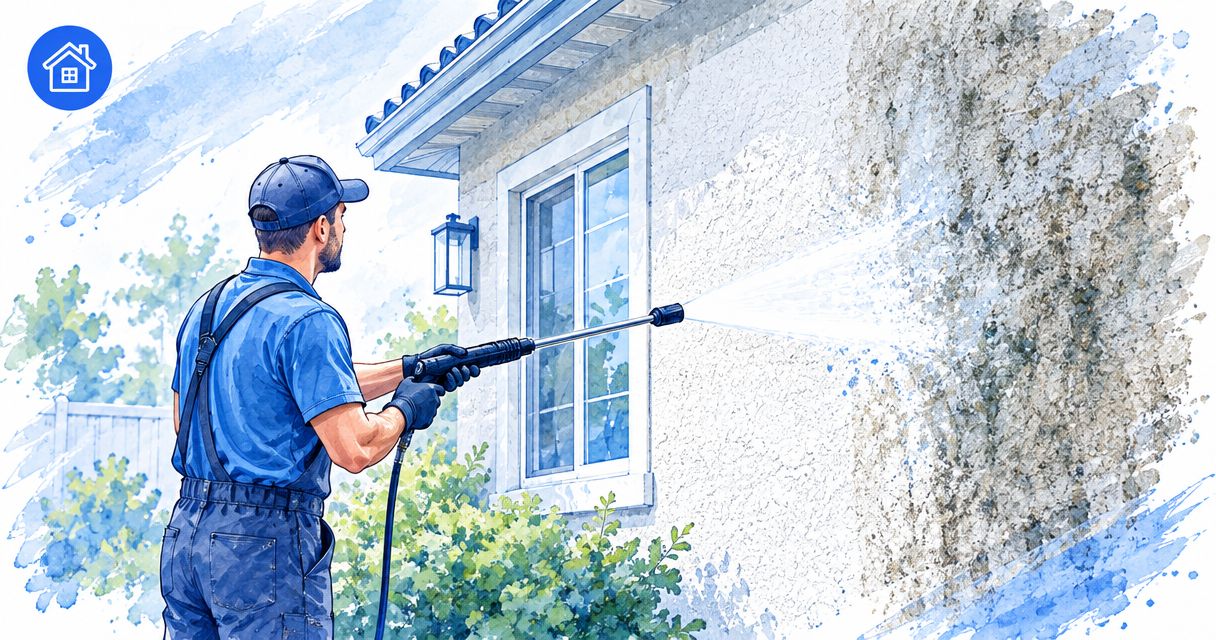
Yes, pressure washing can damage stucco siding by stripping its finish, loosening weakened material, and forcing water through cracks or gaps. A sound wall needs a cleaning method suited to its finish; cracked, loose, or moisture-damaged stucco needs assessment before washing, not a stronger spray.
- Can pressure washing damage stucco? Yes. Concentrated spray can erode the finish and force water through openings.
- Choose a cleaning method from the wall’s condition and finish instructions, not the washer’s maximum setting.
- Stop if washing releases grit, lifts paint, or reveals dampness inside the home.
- Lavarecleans serves homeowners seeking local exterior cleaning in Santa Barbara, Montecito, Ojai, and Ventura.
Why this matters
Stucco cleaning is not the same job as driveway cleaning. A method that removes dirt from concrete can damage a textured wall, painted finish, or vulnerable joint around a window.
For your 2026 home-care plans, separate appearance from condition. Coastal salt film and hillside dust are cleaning concerns; loose finish, open cracks, and unexplained dampness need a different response. Start with this guide to Santa Barbara surfaces that need gentle washing if your exterior includes several materials.
Can pressure washing damage stucco siding?
Yes. The main risks are surface erosion and water entering places the wall assembly is designed to keep dry. Damage depends on the wall’s condition, the finish, and how the water reaches it—not simply whether the equipment is called a pressure washer.
The following comparison separates cleaning approaches from repair needs. These are decision points, not instructions to wash an unidentified finish yourself.
| Approach | Best for | Benefit | Limitation or risk |
|---|---|---|---|
| Gentle rinsing | Loose dust on sound, compatible finishes | Removes loose material without relying on concentrated impact | Does not necessarily remove attached growth or persistent stains |
| Finish-approved detergent cleaning | Soiling that needs more than water alone | Lets the cleaning solution do part of the work | Requires compatible chemistry, surface protection, and proper rinsing |
| Concentrated high-pressure spraying | Not recommended as a default for stucco | Can remove surface material quickly | Can remove finish along with dirt and drive water into openings |
| Repair assessment before cleaning | Cracks, loose areas, bulging, or unexplained dampness | Addresses defects before adding water | Delays cosmetic cleaning and can require a separate repair professional |
A clean-looking wall is not proof that the method was safe. Check the dried finish and nearby interior surfaces, not just the appearance while everything is wet.
Why the risk of stucco damage varies
Two walls on the same home can need different treatment. A sheltered wall with intact coating is not equivalent to a sun-exposed wall with peeling paint and failed sealant.
- Existing condition: Cracks, loose patches, and peeling coatings leave vulnerable areas that cleaning cannot repair.
- Finish type: Painted stucco, exposed cement-based finishes, and synthetic exterior systems have different care requirements. Confirm what is installed.
- Spray concentration: A narrow jet concentrates force on a smaller area. Holding it close increases the risk of surface damage.
- Water direction: Spraying into joints, vents, window edges, or beneath trim creates an entry route for water.
- Cleaning chemistry: An unsuitable cleaner can affect coatings and adjacent materials even when water pressure is low.
- Access: Difficult footing and awkward reach make controlled application harder. A ladder does not make an unsuitable washing method safe.
For a 2026 quote, ask the cleaner to explain which of these factors changes the plan for your house. An answer based only on machine size leaves the wall itself out of the decision.
Check the wall before anyone starts washing
Inspect first. Choose the method second. A quick walk around the house should establish what the wall is, where it is vulnerable, and which areas need to stay out of the cleaning scope.
- Inspect. Look from the ground for cracks, missing finish, peeling paint, staining below openings, and areas that appear swollen or detached. Do not probe unstable material or climb to investigate it.
- Identify. Check your maintenance records for the finish or exterior system. If you cannot identify it, ask a qualified professional before treating it like conventional cement stucco.
- Protect. Discuss windows, doors, outlets, vents, plants, and nearby finishes. Protection must not block drainage openings or substitute for repairing failed seals.
- Test. Have the proposed method tested in an inconspicuous, sound area. Evaluate the dried result before expanding the work.
- Review. Agree on the signs that mean work stops, including loosening material, lifting coating, or unexpected water entry.

A test patch reduces uncertainty; it does not certify the whole wall. Repairs, exposure, and coatings can vary around the house, so the cleaner still needs to watch the surface as work progresses.
Is soft washing safer for stucco than pressure washing?
Lower-impact cleaning reduces the risk of spray erosion, but “soft washing” is not a complete safety specification. You still need to know the cleaner, application method, rinse method, and suitability for your finish.
Ask what the contractor means by the term. A gentle application followed by an aggressive rinse does not solve the original problem. Neither does applying an unsuitable chemical at low pressure.
The useful question is whether the entire process follows the finish manufacturer’s care instructions and suits the wall’s present condition. If those instructions are unavailable, the contractor should explain how the finish will be identified and assessed before choosing a method.
Do not confuse a gentler approach with guaranteed stain removal. Some marks reflect coating failure, mineral deposits, or moisture problems rather than removable surface dirt. Chasing every discoloration with more pressure is the wrong trade.
What pressure setting is safe for stucco?
There is no universal pressure setting that makes every stucco wall safe to wash. Finish condition, spray pattern, working distance, and water direction all affect what happens at the surface.
A machine’s stated pressure is not a substitute for a wall-specific plan. The same equipment can be used very differently, and an already failing coating can detach under treatment that an intact finish tolerates.
For your 2026 cleaning appointment, ask for the proposed method rather than requesting a particular machine setting. Follow the finish manufacturer’s instructions where available, and leave compromised areas out until they have been assessed.
Do not use a close, concentrated jet to test whether a stain will move. If a gentle, compatible method does not work, stop and identify the mark before changing the approach.
Can washing force water behind stucco?
Water can enter through cracks, failed joints, and openings when spray is directed into them. Window perimeters, penetrations, vents, and transitions between materials deserve particular attention.
Stucco assemblies manage rain and drainage as a system. A forceful stream aimed upward or into an opening is not the same exposure as ordinary rainfall. Avoid treating every visible gap as something to spray clean or seal shut; some openings serve a drainage function.
Check inside near windows and doors if there is any concern during washing. New dampness, dripping, or a wet patch means stop the work and investigate rather than finish the elevation first.
Persistent staining also deserves attention before cleaning. A mark that repeatedly returns below the same opening can point to a water-management issue that surface washing alone will not resolve.
What should a stucco-cleaning quote explain?
A useful quote describes the wall and the work, not just “house wash.” You should understand what will be cleaned, how vulnerable areas will be handled, and what remains outside the scope.
For a 2026 quote, confirm these points before accepting:
- Included surfaces: Identify which stucco walls, trim, windows, and adjacent areas are included. Do not assume a whole-house description includes detailed window cleaning.
- Condition concerns: Record visible cracks, peeling areas, and existing stains before work begins. Ask which areas need repair assessment first.
- Proposed method: Request a plain explanation of the cleaning solution, application, test patch, and rinse.
- Access and protection: Discuss hillside access, planted beds, exterior electrical fittings, and delicate finishes near the work.
- Expected limits: Identify marks that are unlikely to respond to ordinary cleaning and areas the cleaner will leave alone.
- Follow-up: Ask how to report a concern once the wall has dried and the work can be checked properly.
Lavarecleans is a local exterior-cleaning option for homeowners in Santa Barbara, Montecito, Ojai, and Ventura. Request a free in-person quote through Lavarecleans and point out the stucco areas you are concerned about.
The local crew’s promise is to return and make it right if you are unhappy. That promise does not make cleaning a substitute for stucco repair; agree on the condition and scope before work begins.
When should you stop and call a repair professional?
Stop when the wall shows signs of failure, not after cleaning makes those signs larger. Loose material, bulging areas, ongoing dampness, and unexplained cracking need assessment before more water is applied.
During washing, stop if grit or finish releases, paint begins lifting, or water appears inside. Do not make another pass to even out a damaged patch. Additional spraying can enlarge the affected area and make the original condition harder to document.
Photograph the area from a safe position and record what happened. If the wall has an identified manufacturer or installer, keep those records available for the professional assessing it.
Cleaning and repair have different purposes. A cleaner removes suitable surface soiling; a qualified repair professional investigates damaged material and water entry. Booking the correct work first protects the rest of your maintenance plan.
FAQ
Can pressure washing damage stucco on a painted house?
Yes, pressure washing can lift paint and damage weakened stucco beneath it. Check coating condition and follow the coating and wall-system care instructions before washing.
Is soft washing always safe for stucco?
No, soft washing is not automatically safe for every stucco finish. The cleaning solution, application, rinse, and wall condition must all suit the surface.
Can I pressure wash stucco that already has cracks?
Have cracked stucco assessed before washing it. Spray can force water into openings, and cleaning does not repair the cause of cracking.
Will pressure washing remove every stain from stucco?
No, pressure washing does not safely remove every stucco stain. Discoloration can involve mineral deposits, damaged coatings, or moisture issues that need a different response.
Should windows be cleaned before or after stucco washing?
Arrange wall washing before the final exterior window cleaning so splash and residue do not undo finished glass work. Confirm that both services and the sequence are included in the scope.
What should I ask before booking stucco cleaning in 2026?
Ask how the finish will be identified, which defects exclude an area from washing, and how the method will be tested. Confirm protection, rinsing, and follow-up before accepting the quote.
Does Lavarecleans offer an in-person exterior-cleaning quote?
Lavarecleans invites homeowners to request a free in-person quote. Discuss your stucco concerns and any window, solar panel, gutter, or other exterior-cleaning needs during the visit.
One last thing
A wet wall can hide uneven cleaning and surface changes. Judge the test patch after it dries, not while it looks freshly rinsed. That simple checkpoint belongs in your 2026 cleaning plan before anyone moves across the rest of the house.
If window cleaning is part of the visit, schedule the final glass work after wall washing. You avoid having rinse splash land on windows that have just been finished.