

Best overall: manual debris removal followed by a controlled rinse and drainage check. Best for collecting loose debris: gutter vacuuming; best for light maintenance after debris removal: a gentle hose rinse. This 2026 guide ranks gutter-cleaning methods for Santa Barbara homes by what they remove and what they confirm—not by how clean the gutter looks from the yard.
- Gutter cleaning methods ranked by thoroughness: Santa Barbara homeowners should choose debris removal plus a drainage check.
- Manual removal and gutter vacuuming collect debris; rinsing checks whether water reaches the outlet.
- A leaf blower clears loose material but does not confirm downspout drainage.
- Lavarecleans offers local gutter cleaning; request a free in-person quote with a clear scope.
Why this matters
A gutter can look empty and still drain poorly. Leaves at the outlet, sediment along the bottom, or a blockage inside the downspout require different attention. Cleaning the open channel addresses only part of the route rainwater follows.
For your 2026 maintenance plan, ask what the service includes before choosing a tool or accepting a quote. Start with how to compare gutter-cleaning quotes, then check whether debris collection, outlet inspection, and drainage verification appear in the scope.
Around oak-shaded properties in Montecito and Ojai, look closely at accumulated leaves and smaller debris. On a hillside property, access matters just as much as the material in the gutter. A thorough method still needs a safe way to reach and inspect the work.
What makes the best gutter-cleaning method?
These 5 criteria determine the ranking:
- Debris removal: Does the method collect leaves and sediment rather than move them elsewhere?
- Outlet clearance: Can the person doing the work check the opening into the downspout?
- Drainage verification: Does the work establish whether water exits through the intended discharge point?
- Inspection: Can remaining buildup, standing water, and visible damage be identified?
- Controlled cleanup: Does the method limit scattered debris and protect nearby surfaces?
Thoroughness means removing the obstruction and checking the water's path. No single tool proves both happened. A vacuum collects material, a hose introduces water, and direct inspection helps explain what remains.
Gutter-cleaning methods at a glance
The ranking below compares 5 approaches for residential gutters. It assumes suitable equipment and safe access; it is not a recommendation to climb onto a roof.
| Rank and method | Best for | Standout feature | Key limitation |
|---|---|---|---|
| 1. Manual removal plus controlled rinse | A complete cleaning and drainage check | Combines debris collection with observation of water flow | Requires access and a suitable discharge arrangement |
| 2. Vacuuming plus drainage verification | Collecting loose gutter debris | Collects material instead of blowing it across the property | Hidden residue and outlets still need inspection |
| 3. Manual removal alone | Thick, wet leaf buildup | Removes bulk material directly | Does not establish that the downspout drains |
| 4. Gentle hose rinse alone | Light maintenance in an already-cleared gutter | Makes water movement visible | Can push debris toward an obstructed outlet |
| 5. Leaf blower alone | Loose, dry leaves in accessible open gutters | Moves lightweight material out of the channel | Scatters debris and does not verify drainage |
1. Manual removal plus rinse: best for a complete clean
Manual removal takes out leaves, twigs, and accumulated material before water enters the gutter. A controlled rinse then helps reveal remaining sediment and whether water reaches the outlet. Observing the discharge completes the check where the drainage layout allows it.
This approach ranks first because it separates collection from verification. You are not relying on water to force an unknown pile of debris through a narrow opening.
Manual removal plus rinse pros:
- Collects bulky material before rinsing.
- Allows close inspection of accessible gutter sections.
- Makes residual buildup and drainage problems easier to distinguish.
Manual removal plus rinse cons:
- Requires safe access to the relevant sections.
- A rinse does not repair sagging gutters or failed joints.
- Buried discharge pipes require separate attention when their condition is unclear.
Best for: Homeowners who want both debris removal and evidence that the accessible drainage route works.
For a 2026 quote, ask whether the final check includes the downspout discharge—not just water disappearing into the top opening. If a blockage remains, the scope should explain the next step rather than treating the rinse as proof of completion.
Verdict: Buy this service scope when you want the most complete approach in this ranking.
2. Vacuuming plus verification: best for debris collection
A gutter vacuum uses suction to collect material from the channel. Depending on the equipment and property layout, an operator can reach some sections from ground level. Collection is its main strength; drainage verification remains a separate task.
Vacuuming ranks below direct removal with a rinse because collection alone does not establish the condition of every outlet or downspout. It becomes a stronger option when inspection and a suitable flow check follow it.
Gutter vacuuming pros:
- Collects debris rather than distributing it across the property.
- Offers a ground-based approach where reach and access permit.
- Can be paired with visual inspection and drainage checks.
Gutter vacuuming cons:
- Compacted or adhered material can need additional attention.
- Reach depends on roof geometry, obstructions, and equipment.
- Suction at the gutter does not prove an underground drain is clear.
Best for: Homeowners who prioritize debris collection and want the contractor to assess ground-based access.
Ask how the operator identifies material left behind. A camera or another suitable inspection method answers a different question from suction: not whether debris was collected, but whether the gutter is clear.
Verdict: Buy when inspection and drainage verification accompany the vacuuming.
3. Manual removal alone: best for thick leaf buildup
Hand removal or a suitable scoop lifts accumulated debris out of an accessible gutter. It is a direct way to tackle a wet leaf mat without first sending that material toward the downspout. The collected waste can then be contained for cleanup.
The limitation is straightforward. Removing visible material does not show whether a hidden downspout blockage remains.
Manual removal alone pros:
- Removes bulky debris directly.
- Keeps collected material out of the downspout.
- Allows inspection of the exposed gutter bottom.
Manual removal alone cons:
- Does not verify water flow.
- Can leave fine residue behind.
- Requires safe access along the sections being cleaned.
Best for: Gutters with thick leaf accumulation that needs removal before any drainage test.
For an oak-shaded home, ask the contractor to distinguish clearing the leaf mat from completing the drainage check. Those are separate tasks, even when the same person performs both during one visit.
Verdict: Hold as a complete service; choose it as the debris-removal stage of a fuller clean.
4. Gentle hose rinse alone: best for light maintenance
A gentle rinse moves water through an already-cleared gutter and helps expose residual sediment. It also provides a way to observe flow toward the outlet. It works better as a finishing step than as a substitute for collecting substantial debris.
If leaves cover the outlet, adding water can move more material into the same restriction. Establish that the channel and opening are clear before treating a hose as the cleaning method.
Gentle hose rinse pros:
- Makes water movement visible.
- Helps remove loose residue after bulk debris collection.
- Supports a discharge check when the outlet is accessible.
Gentle hose rinse cons:
- Does not collect leaves or twigs.
- Can move debris into a downspout.
- Water entering the outlet does not establish that buried drainage is clear.
Best for: An already-cleared gutter that needs a finishing rinse and flow observation.
For your 2026 service request, describe the condition rather than prescribing a hose-only visit. A gutter containing a leaf mat needs a different starting point from one containing a light layer of loose sediment.
Verdict: Buy as a finishing step; skip as the sole method for substantial buildup.
5. Leaf blower alone: best for loose dry leaves
A blower moves lightweight, dry debris out of an open gutter. It does not collect that debris or demonstrate that water will pass through the downspout. Nearby windows, planting beds, and walkways also need consideration before material is blown out.
This method ranks last for thoroughness because an apparently empty channel is not a drainage test. Wet material and debris around the outlet still require inspection.
Leaf blower pros:
- Moves loose, dry leaves from accessible open sections.
- Does not introduce rinse water.
- Can serve as an initial clearing step under suitable conditions.
Leaf blower cons:
- Scatters debris onto surrounding surfaces.
- Does not confirm outlet or downspout clearance.
- Provides no evidence of water reaching the discharge point.
Best for: Preliminary removal of loose, dry leaves where surrounding cleanup is included.
If exterior window cleaning is also on your list, finish debris-producing gutter work first. Otherwise, material cleared from above can land on glass that has just been cleaned.
Verdict: Skip as a stand-alone thorough-cleaning service.
How this ranking works
This is a process-based ranking, not a timed equipment test. Methods rank higher when they combine controlled debris removal, inspection, and drainage verification. The property still determines which equipment provides suitable access.
A vacuum with inspection and a discharge check is a more complete service than hand removal without either check. Ask about the finished scope, not simply whether the crew uses a preferred tool.
Which gutter-cleaning method should you choose?
Choose debris collection followed by inspection and drainage verification. Manual removal plus a controlled rinse is the default recommendation; vacuum collection is a sound alternative when the follow-up checks are included.
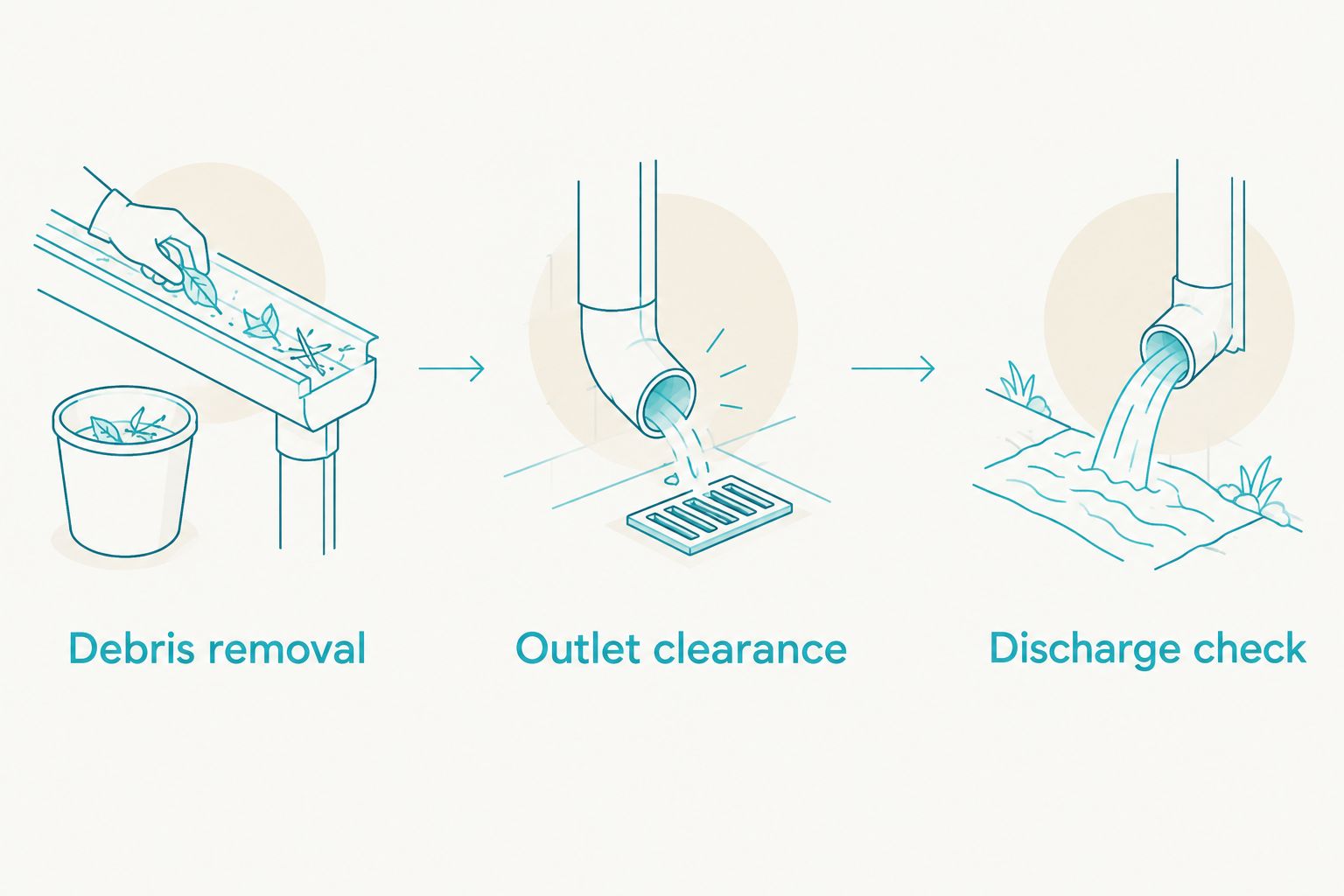
Use these 3 stages to discuss your 2026 quote:
- Debris removal: Identify how leaves, twigs, and sediment will be collected.
- Outlet clearance: Confirm how the opening into each downspout will be checked.
- Discharge check: Establish where water exits and what happens if flow remains restricted.
A concealed outlet, gutter guard, or buried drain changes what the crew can inspect. Have those limits explained before work begins. Cleaning also does not correct a gutter that needs adjustment or repair.
Lavarecleans is best for local homeowners who want gutter cleaning from a local crew with a promise to return and make it right if they are unhappy. Request a free in-person quote in Santa Barbara, Montecito, Ojai, or Ventura, and ask which checks your property needs.
Request an in-person quote
Discuss gutter access, debris removal, and drainage checks for your home.
FAQ
What's the most thorough gutter-cleaning method in Santa Barbara?
Manual debris removal followed by a controlled rinse and drainage check is the most complete approach in this ranking. It combines collection with a check of the water's path rather than relying on appearance alone.
Is gutter vacuuming better than cleaning by hand?
Gutter vacuuming is better suited to collecting loose debris where suitable equipment can reach; hand removal gives direct access to accumulated material. Either approach needs inspection and drainage verification to form a complete service.
Can I clean my gutters with just a garden hose?
A garden hose is a finishing tool for an already-cleared gutter, not a substitute for removing substantial debris. Rinsing leaves toward an obstructed outlet can move the blockage into the downspout.
Does gutter cleaning fix an overflowing downspout?
Gutter cleaning addresses an overflowing downspout when removable debris is causing the restriction and the service clears that obstruction. Damage, drainage layout, or a blocked underground line requires separate assessment.
Is a leaf blower enough to clean gutters thoroughly?
A leaf blower alone is not enough to verify a thorough gutter clean. It moves loose debris but does not establish whether the outlet and downspout carry water to the discharge point.
Do gutter guards remove the need for cleaning?
Gutter guards do not eliminate inspection and maintenance. Material can accumulate on the cover or enter through openings, and access depends on the guard design.
What should I ask Lavarecleans before booking gutter cleaning?
Ask Lavarecleans how the quote addresses debris removal, outlet access, drainage verification, and cleanup. Mention gutter guards, difficult access, and any overflow you have observed so the in-person assessment covers those concerns.
One last thing
Before your 2026 visit, note where overflow happens during rain, if you can observe it safely from the ground. An overflowing corner, water behind the gutter, and water backing up at a downspout are different observations. Tell the crew what you saw; do not climb up to diagnose it.
Ask for the result in plain language: what was removed, whether drainage was checked, and what still needs attention. That is more useful than a tool name on an invoice.