

Best overall: wet cleaning followed by a squeegee for accessible, dusty glass. Best for suitable upper exterior windows: a purified-water pole system. Best for small indoor touch-ups: a clean microfiber cloth. This 2026 guide compares window cleaning methods for Ojai hillside homes so you can choose the right approach before requesting a quote.
- For window cleaning Ojai homeowners can assess, wet cleaning and a squeegee are the default for accessible, dusty glass.
- Purified-water poles suit upper exterior windows only when ground access and window condition allow.
- Microfiber works for small indoor fingerprints, not dry scrubbing of gritty exterior glass.
- Lavarecleans is a local window cleaning option for Ojai homeowners seeking a free in-person quote.
Why this matters on an Ojai hillside
Hillside dust changes the first step of window cleaning: loosen and remove grit before making a finishing pass. A cloth dragged across dusty glass can carry abrasive particles with it. More rubbing is not the answer.
The other question is access. A window above a sloping garden needs a different plan from a sliding door beside a level patio. Choose the method for the glass and the ground beneath it, not just the height.
Lavarecleans provides window cleaning for homeowners in Ojai, Santa Barbara, Montecito and Ventura. Its local crew offers a free in-person quote and a promise to return and make it right if you are unhappy.
What makes the best window cleaning method?
Use these criteria when comparing methods or reviewing a window cleaning quote in 2026:
- Grit removal: The process should loosen and lift hillside dust before the finishing tool moves across the pane.
- Safe access: The cleaner needs suitable footing, a clear working area and a method that fits the slope.
- Glass compatibility: Coatings, tint film, damaged seals and older frames need attention before cleaning starts.
- Residue control: A clean squeegee or properly purified rinse should remove cleaning residue rather than redistribute it.
- Complete scope: Glass, screens, frames and tracks are different tasks. The quote should state what is included.
- Problem identification: Loose dirt, mineral deposits and permanent glass damage do not respond to the same treatment.
Window cleaning methods at a glance
The order below puts the broadest-use method first. Each later option solves a different problem rather than replacing the first choice everywhere.
| Method | Best for | Standout feature | Key limitation |
|---|---|---|---|
| Wet cleaning and squeegee | Accessible windows with general dust and grime | Direct control over washing, water removal and edges | Requires safe access to the pane |
| Purified-water pole cleaning | Suitable upper exterior windows | Brushes and rinses glass from an appropriate ground position | Does not clean interior glass; obstacles can prevent access |
| Damp microfiber touch-up | Small indoor fingerprints and isolated marks | Targets a small area without washing the whole window | Not suitable for gritty exterior buildup |
| Professional mineral-deposit treatment | Persistent sprinkler spotting after ordinary cleaning | Addresses deposits rather than loose surface dirt | Needs glass assessment; etched damage can remain |
1. Wet cleaning and squeegee: best for accessible dusty windows
Wet cleaning uses a suitable cleaning solution and clean applicator to loosen dirt, followed by a squeegee to remove the liquid. Edge detailing finishes the pane. For accessible windows on an Ojai hillside home, this is the most useful starting point.
The important distinction is between washing and wiping. Washing suspends and removes dirt; wiping a dusty pane with a barely damp cloth can simply move grit around. Tools also need cleaning as the work progresses.
Wet cleaning and squeegee pros
- Gives the cleaner direct control over stubborn areas and pane edges.
- Works on both interior and exterior glass when access is suitable.
- Allows close inspection of marks that remain after ordinary cleaning.
- Fits accessible sliding doors, patio-facing windows and smaller panes.
Wet cleaning and squeegee cons
- Requires a safe way to reach the working surface.
- Dirty applicators and worn squeegee edges can leave residue or lines.
- Does not automatically remove bonded mineral deposits or repair damage.
Best for: Accessible glass with a general layer of hillside dust, fingerprints or ordinary grime.
Ask how the cleaner will handle the dirtiest lower panes and the edges around divided windows. Indoors, ask about protecting flooring and nearby furnishings. These details tell you more about the job than a promise of spotless glass alone.
Verdict: Buy this approach as your default for accessible, dusty windows.
2. Purified-water pole cleaning: best for upper exterior glass
A water-fed pole combines a brush with a purified-water supply. The brush loosens dirt, and the rinse carries it away. Removing dissolved minerals from the rinse water reduces the mineral residue left as droplets dry.
For your 2026 window cleaning plan, treat this as an access option, not an automatic answer for every upstairs pane. A pole still needs a workable position on the ground. Deep setbacks, planting, overhangs and hillside footing affect whether the cleaner can reach and rinse properly.
Purified-water pole cleaning pros
- Can reduce the need for ladder access where suitable ground access exists.
- Combines agitation and rinsing on exterior glass.
- Avoids leaving ordinary tap-water minerals behind when purification is working properly.
- Suits some upper windows that are awkward to clean by hand.
Purified-water pole cleaning cons
- Does not address the inside surface of the window.
- Ground obstacles and recessed glass can limit brush contact or rinsing.
- Loose seals and deteriorated frames need assessment before water is applied.
Best for: Upper exterior windows with suitable ground access and sound surrounding components.
Ask whether the quote includes frames and whether the cleaner has checked the approach from below. The guide to water-fed poles for upstairs windows explains the access questions worth raising.
Verdict: Buy when the access assessment supports it; skip an improvised setup on unstable ground.
3. Damp microfiber touch-up: best for small indoor marks
A clean, lightly damp microfiber cloth works for an isolated fingerprint or small indoor smudge on compatible glass. Use a clean section of cloth and avoid spreading the mark across the whole pane.
This is a maintenance method between full cleans. It is not a shortcut for a dusty exterior window, and it will not remove dirt trapped behind screens or along frames.
Damp microfiber touch-up pros
- Targets a small mark without washing an entire window.
- Gives you close control on safely accessible indoor glass.
- Lets you address a fresh fingerprint without disturbing surrounding areas.
Damp microfiber touch-up cons
- A cloth carrying grit can scratch the surface.
- Cleaning-product residue or fabric softener can leave smears.
- Large panes often need a full wash rather than repeated spot wiping.
Best for: Small indoor fingerprints on otherwise clean, safely reachable glass.
Check the care instructions for tint film or specialty coatings before choosing a cleaning product. Do not treat a glass cleaner, abrasive pad or solvent as universally suitable just because it worked on a different window.
Verdict: Buy for minor indoor touch-ups; skip for gritty exterior cleaning.
4. Professional mineral-deposit treatment: best for sprinkler spots
Mineral deposits are different from loose hillside dust. If pale rings or spots remain after ordinary washing, the next step is assessment—not harder scrubbing. Deposits and etched glass can look similar, but cleaning cannot reverse glass damage.
A professional should identify the surface, review any coating restrictions and test a suitable treatment before wider application. Keep this separate from routine cleaning in your 2026 quote so you know what work is being proposed.
Professional mineral-deposit treatment pros
- Addresses a problem that ordinary washing can leave behind.
- Separates removable deposits from possible permanent damage.
- Allows a limited test before treating a larger area.
Professional mineral-deposit treatment cons
- Not every remaining mark is removable.
- Incompatible chemicals or abrasive methods can damage glass and nearby materials.
- Routine window cleaning does not necessarily include this work.
Best for: Persistent spotting near sprinklers or other repeated sources of mineral-bearing water.
Tell the cleaner which panes get wet from irrigation. Also ask whether changing the sprinkler direction would stop the same problem returning. Cleaning the deposit without addressing repeated wetting leaves the cause in place.
Verdict: Hold until the glass has been assessed; skip untested abrasive treatment.
Match the method to your home before booking
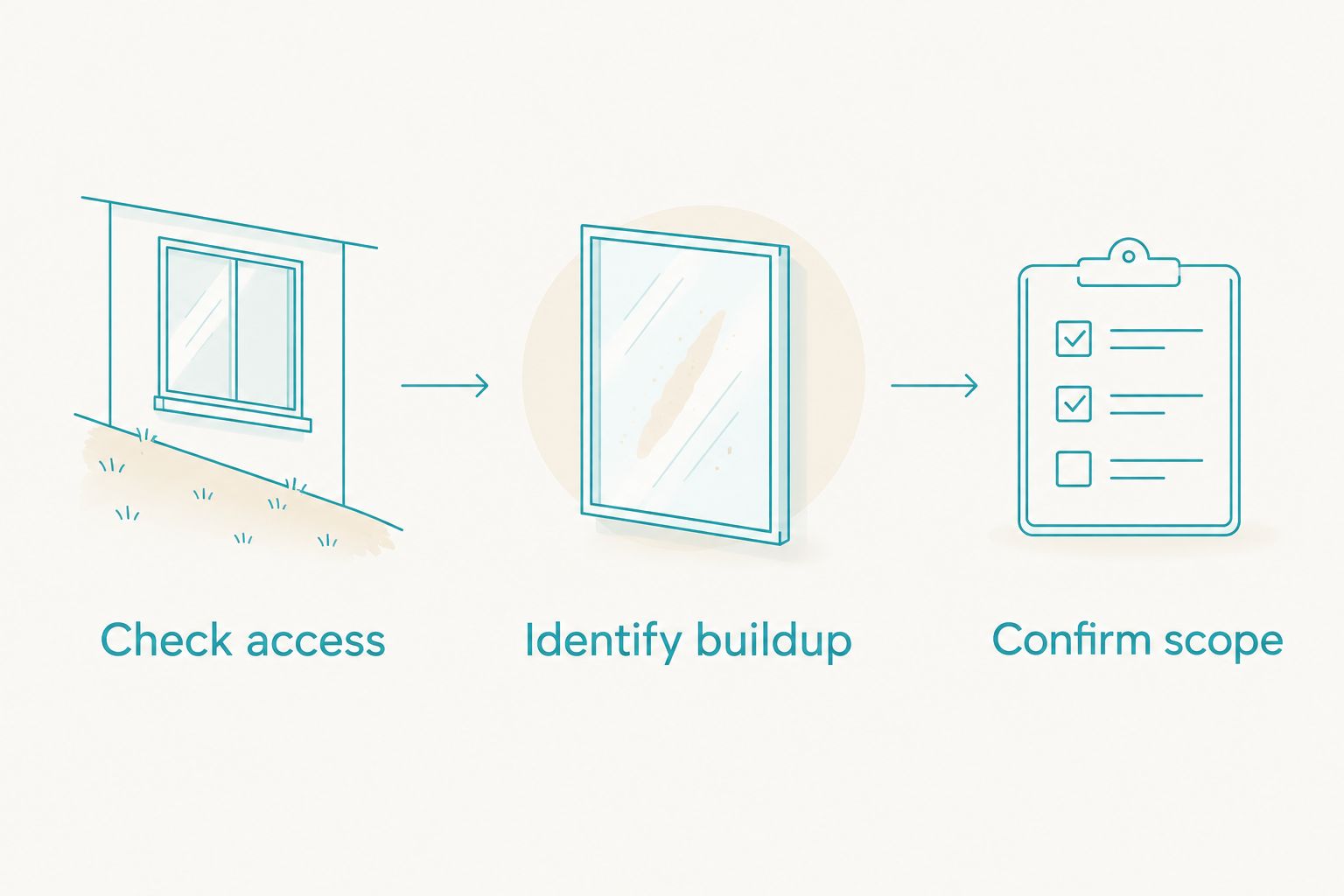
A useful assessment follows a simple sequence. You do not need to diagnose every mark yourself, but you should be able to point out the windows that concern you.
Check access
Look at the ground below each window, not just the window itself. Mention steep planting beds, narrow side yards, locked gates and panes above roofs. Do not climb out to inspect them.
Identify buildup
Describe what you see: loose dust, fingerprints, cobwebs or persistent sprinkler spots. Avoid assuming every cloudy patch is surface dirt. Moisture or haze between panes needs a different assessment from exterior grime.
Confirm scope
Decide whether you want exterior-only or inside-and-out cleaning. Then ask separately about screens, tracks, frames and any specialist spot treatment. A clear scope prevents two quotes for different jobs from looking equivalent.
Bring those observations to the in-person visit. Lavarecleans is a local window cleaning option for Ojai homeowners who want a free in-person quote and a crew that will return to make it right if they are unhappy.
Request an in-person window cleaning quote
Show the crew your hillside access, dusty panes and any persistent spots.
How the methods rank
The ranking follows grit removal, safe access, glass compatibility, residue control and scope. Wet cleaning with a squeegee takes the default position because it suits ordinary dirt on accessible glass. Purified-water poles take the upper-exterior slot because access changes the task.
Microfiber earns a narrower role: small indoor maintenance. Mineral-deposit treatment stays separate because a persistent mark requires diagnosis before treatment. A specialist method is not a better method when it solves the wrong problem.
Which window cleaning method should you choose?
Choose wet cleaning and a squeegee for accessible, dusty windows. Ask about purified-water pole cleaning for suitable upper exterior panes. Keep microfiber for small indoor marks and request a separate assessment for stubborn mineral spotting.
For window cleaning in Ojai in 2026, start with the windows you use and look through most: the kitchen view, patio doors and living-room glass. Then decide whether the whole house needs attention or whether a clearly defined smaller scope meets your needs.
Lavarecleans also provides solar panel cleaning, gutter cleaning, pressure washing and holiday lighting. If you are considering other work, ask for each service to be described separately rather than assuming one cleaning method applies across the property.
FAQ
What's the best window cleaning method for a dusty Ojai home?
Wet cleaning followed by a squeegee is the default for accessible glass with ordinary dust and grime. The cleaner should loosen and remove grit before making a finishing pass. Upper exterior windows need a separate access assessment.
Can I wipe hillside dust off my windows with a dry cloth?
Do not dry-scrub gritty exterior glass. Dust can contain abrasive particles that a cloth drags across the surface. Loosen and remove the dirt with a method suitable for the glass.
Is purified-water cleaning better than a squeegee?
Purified-water cleaning suits some upper exterior windows, while a squeegee gives direct control on accessible panes. Neither method wins for every window. Ground access, glass condition and the required scope decide the choice.
Will ordinary window cleaning remove sprinkler spots?
Ordinary window cleaning does not reliably remove bonded mineral deposits. Persistent spots need assessment and, where appropriate, a compatible treatment. Etched glass can remain marked after deposits are removed.
Should screens be cleaned with dusty windows?
Ask for screen cleaning when the screens themselves are dirty, and confirm it in the quote. Glass cleaning does not automatically mean screens, tracks and frames receive the same attention. Each task should have a clear scope.
How often should I book window cleaning in Ojai?
Base the schedule on how quickly visible dust returns, your exposure and the windows you use most. Inspect after dusty conditions and adjust the next visit to the actual buildup. A fixed calendar alone does not describe your home's needs.
Can Lavarecleans give me an in-person window cleaning quote?
Lavarecleans offers a free in-person quote for homeowners in Ojai and its other stated service areas. Use the visit to discuss access, interior and exterior glass, screens and persistent marks. Its promise is to return and make it right if you are unhappy.
One last thing
Before your next window clean in 2026, check whether nearby sprinklers hit the glass. Take a look from safe ground while irrigation runs; do not adjust equipment from a ladder or roof.
Stopping repeated sprinkler wetting matters more than repeatedly treating the same spots. Tell the cleaner which panes are affected so ordinary dirt removal and mineral-deposit assessment stay separate.