
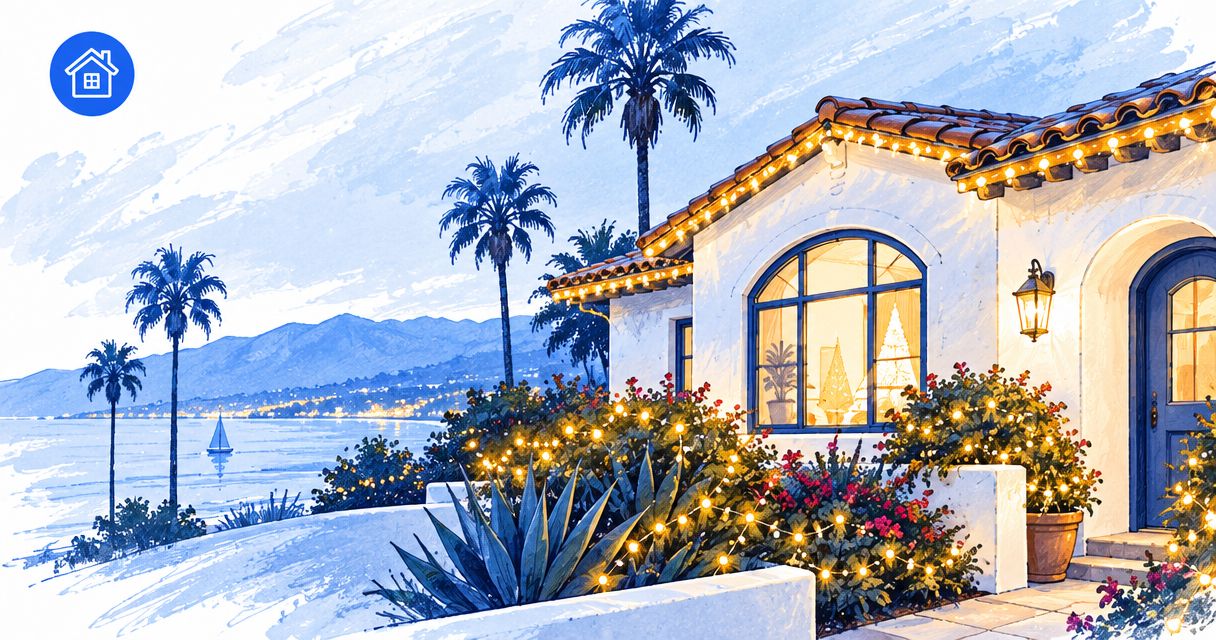
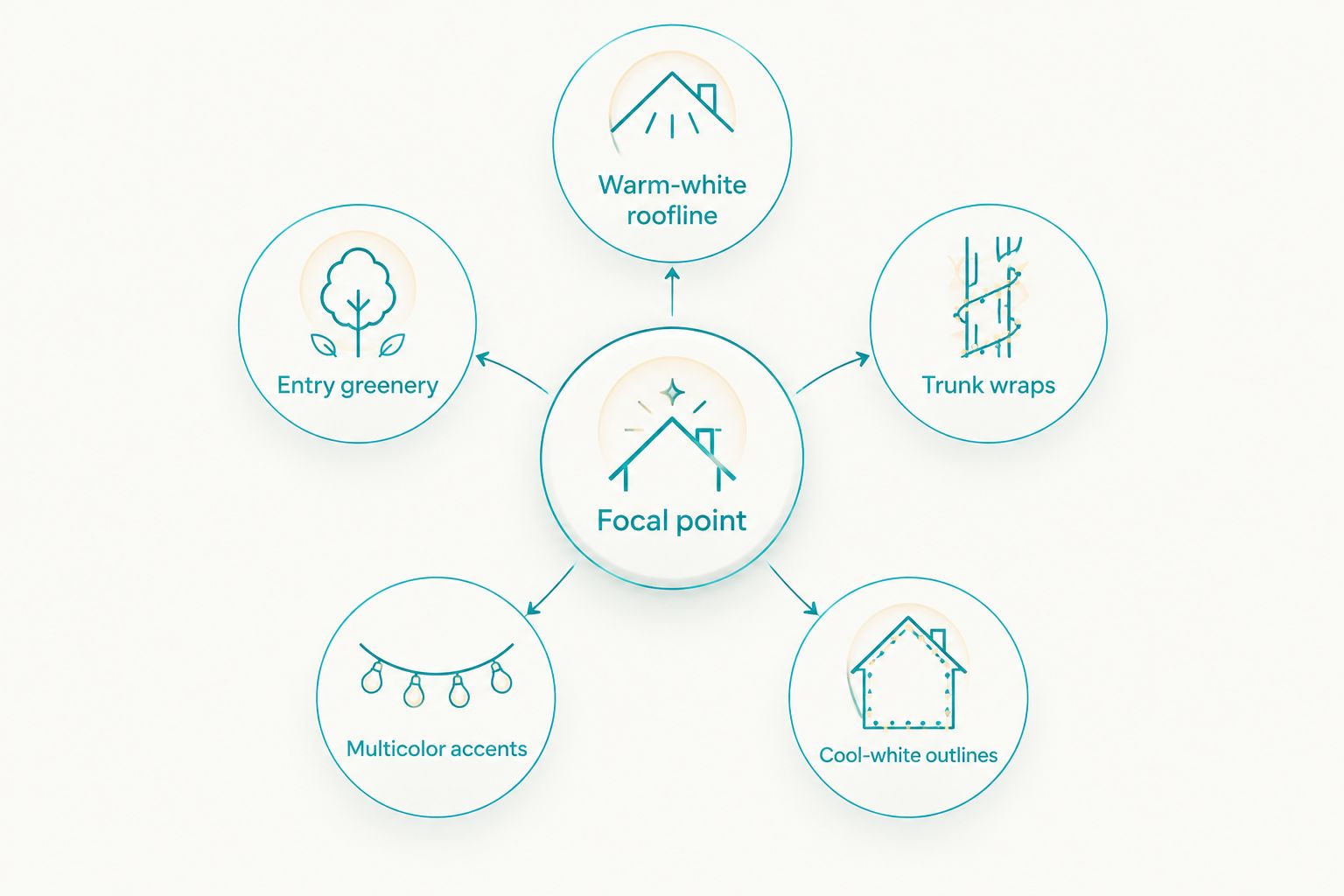
Best overall: warm-white rooflines. Best for a small focal point: illuminated entry greenery. Best for a garden-led display: tree-trunk wraps. These are the strongest starting points for Santa Barbara homes in 2026; choose multicolor accents for a playful entrance or cool-white outlines for a deliberately crisp look.
- Best Christmas light styles Santa Barbara: warm-white rooflines are the default recommendation for a restrained display.
- Choose illuminated entry greenery when your front door, not your roof, should carry the display.
- Choose tree-trunk wraps for a garden focal point; keep wiring clear of paths.
- Lavarecleans offers holiday lighting for homeowners in Santa Barbara, Montecito, Ojai and Ventura.
Why this matters
Holiday lights work best when you decide what deserves attention before deciding how much to decorate. A visible roof edge, a sheltered doorway and a tree beside a path call for different treatments. Lighting all of them equally gives your eye nowhere to settle.
Lavarecleans is best for homeowners who want local holiday lighting service rather than a do-it-yourself installation. The local crew serves Santa Barbara, Montecito, Ojai and Ventura. You can request a free in-person quote through Lavarecleans.
For your 2026 display, start with the view you actually use: the driveway arrival, the sidewalk or the front door. A display designed only from across the street can miss the entrance you walk through every evening.
What makes the best holiday light style?
Use these criteria before choosing among the 5 styles below. They are design and planning criteria, not claims about measured product performance.
- Architectural fit: Follow an existing line or feature instead of inventing a competing outline.
- Clear focal point: Choose a roofline, entrance or tree as the main event. Let other areas stay quieter.
- Consistent light color: View proposed lights together before mixing warm white, cool white or multicolor strands.
- Practical access: Consider installation, later adjustments and removal before selecting a high or awkward feature.
- Surface protection: Discuss attachment methods around roof tiles, gutters, stucco, painted trim and living trees.
- Everyday use: Keep doorways, gates and walking routes usable, with cords away from foot traffic.
A style earns its place when it suits both the house and the way you use it. A roofline that looks balanced from the road still needs a practical installation plan.
Holiday light styles at a glance
| Style | Best for | Standout feature | Key limitation |
|---|---|---|---|
| Warm-white roofline | A restrained architectural outline | Gives the house a clear silhouette | High or complex edges require access planning |
| Entry greenery | A doorway-centered display | Concentrates light where guests arrive | Has less presence from a distant street |
| Trunk wraps | A garden-led focal point | Brings light into the landscape | Installation and removal require attention around branches and bark |
| Multicolor accents | A playful porch or front window | Makes color the main decorative feature | Mixed palettes can compete with the house |
| Cool-white outlines | A crisp, deliberately simple exterior | Creates a distinct white-light treatment | Needs careful coordination with existing warm lighting |
These are alternatives, not a shopping list. Begin with the style that matches your main feature, then decide whether a second area needs any light at all.
1. Warm-white rooflines: best for a restrained exterior
A warm-white roofline follows a visible roof edge or eave with a consistent light color. It gives the house an outline without asking the garden, doorway and windows to compete for attention. This is the default recommendation for an undecided homeowner.
On a stucco home with a tiled roof, discuss attachment points before choosing the final outline. The visual goal is simple: show the shape of the house, not every change in roof height. There is no need to trace an edge that disappears behind landscaping.
Warm-white roofline pros:
- Gives the display a clear architectural focus.
- Leaves room for a quieter doorway decoration.
- Keeps color decisions straightforward when the same light tone repeats.
Warm-white roofline cons:
- Tall or recessed roof sections complicate access.
- Different warm-white strands can look mismatched when placed together.
Best for: Homeowners who want the house itself to lead the display.
For 2026, ask to compare the proposed roofline lights with your existing porch lights. Warm white is a description, not a promise that every strand will look identical.
Verdict: Choose warm-white rooflines as the default; skip inaccessible decorative edges that add little to the view.
2. Illuminated entry greenery: best for a doorway focal point
Illuminated entry greenery places the display around a wreath, garland or another suitable entrance decoration. The front door becomes the destination rather than a small detail beneath a fully outlined house. This approach suits an entrance you see clearly from the path.
Start with how the door works. Decorations must leave room for the door to open, the latch to operate and guests to stand comfortably. Keep any power connection out of the walking route.
Entry greenery pros:
- Makes the entrance the clear focal point.
- Lets you leave the roof and upper walls undecorated.
- Gives guests a close-up display as they arrive.
Entry greenery cons:
- A recessed doorway can hide the display from the street.
- Greenery needs secure placement without obstructing the entrance.
Best for: Homeowners who care more about the welcome at the door than a street-wide display.
Choose light color with the porch fixture switched on. An existing warm porch lamp belongs in the design decision, even though it is not a holiday decoration. Avoid solving a dim entrance simply by adding more decorative strands.
Verdict: Choose entry greenery for a focused welcome; skip it as the sole feature when the doorway is hidden from your intended view.
3. Tree-trunk wraps: best for a garden-led display
Tree-trunk wraps place the main lighting feature in the landscape instead of on the building. The visible trunk becomes the structure of the display. This makes sense when a tree already frames the approach to your home.
In a Montecito garden or an oak-lined property, first decide which tree is visible from the entrance and street. Do not assume every tree needs lighting. A clearly chosen focal tree is easier to compose around than an assortment of unrelated illuminated branches.
Tree-trunk wrap pros:
- Gives a prominent landscape feature a defined role.
- Leaves rooflines visually quiet.
- Works as a separate focal point away from the front door.
Tree-trunk wrap cons:
- Irregular trunks and branching complicate placement and removal.
- Power routing needs attention where landscaping meets paths.
Best for: Homeowners whose garden is more visible than the front elevation.
Ask how the lights will be attached without constricting the tree or damaging bark. Agree on removal rather than treating seasonal wiring as a permanent landscape fixture. Keep the design within the areas that can be reached and maintained appropriately.
Verdict: Choose tree-trunk wraps when the tree earns the attention; skip branches that require an unsuitable installation approach.
4. Multicolor accents: best for a playful entrance
Multicolor accents make color, rather than a building outline, the main feature. Use a porch, a prominent front window or another contained area to give the palette a clear boundary. The point is a cheerful focal area, not a requirement to decorate every surface.
There are 2 color approaches worth comparing before installation: a repeated multicolor pattern or separate areas assigned different colors. Choose deliberately. Mixing both approaches without a plan makes it harder to see the intended pattern.
Multicolor accent pros:
- Gives the display an unmistakably playful character.
- Works within a defined porch or window area.
- Lets you choose color as the main design decision.
Multicolor accent cons:
- Different color sequences can look unrelated side by side.
- Strong existing exterior colors become part of the palette.
Best for: Households that prefer a colorful holiday display over a quiet architectural outline.
Check the proposed color pattern against the door, trim and any nearby decorations. In 2026, the useful question is still simple: do these colors look intentional together? A new strand does not automatically belong beside an existing set.
Verdict: Choose multicolor accents for a defined, playful area; skip unrelated strands added only to fill space.
5. Cool-white outlines: best for a crisp exterior
Cool-white outlines use a cooler-looking white light to define a selected exterior feature. The result is a different visual direction from warm white, not an upgrade over it. Choose it because you prefer that appearance on your home.
Compare the lights beside your existing fixtures before committing. A cool outline beside a warm porch lamp creates contrast; decide whether you want that contrast rather than discovering it after installation.
Cool-white outline pros:
- Establishes a distinct white-light palette.
- Keeps a simple outline separate from colorful decorations.
- Supports a deliberately spare display when used selectively.
Cool-white outline cons:
- Can clash with the intended mood of existing warm lighting.
- Different white tones remain noticeable when neighboring strands meet.
Best for: Homeowners who specifically prefer a crisp white-light treatment.
Keep the first design restrained. See whether the chosen outline does enough before extending cool white into trees, windows and entrance decorations.
Verdict: Choose cool-white outlines only when the sample suits your exterior; skip them when warm existing lighting is central to the look.
How these styles are ranked
Warm-white rooflines lead because they provide a clear starting decision: follow the house and keep the palette consistent. Entry greenery ranks next for a focused welcome. Tree wraps, multicolor accents and cool-white outlines serve more specific preferences.
This is a design ranking for 2026, not a product test or a score for individual installers. Access, attachment points and the view from your property determine which style belongs first for your home.
Which holiday light style should you choose?
Choose a warm-white roofline if you want a default. Choose entry greenery if the doorway matters more than the roof. Move to tree wraps only when the landscape is your strongest visible feature.
Before requesting a quote, check the proposed display from 3 viewing positions:
- Street view: Identify the feature you want someone passing the property to notice.
- Arrival view: Check what you see when entering the driveway or gate.
- Doorway view: Confirm that decorations and cords leave the entrance usable.
For a 2026 quote, describe the desired feature, the preferred light color and any access concerns. Ask what installation, adjustments and removal the proposed work includes. Confirm equipment responsibilities rather than assuming them.
Lavarecleans offers holiday lighting alongside window, solar panel, gutter and pressure-washing services. Its promise is to return and make it right if you are unhappy. Discuss the specific display and scope during the free in-person quote.
Plan your holiday lighting
Request a free in-person quote for your home and discuss the focal point, light color and installation scope.
FAQ
What's the best Christmas light style for a Santa Barbara home?
Warm-white rooflines are the default recommendation for a restrained architectural display. Choose illuminated entry greenery instead when the front door is the feature you want guests to notice.
Are warm-white Christmas lights better than cool white?
Warm white is the stronger default for a quiet display, but cool white suits homeowners who deliberately want a crisper appearance. Compare both with your existing exterior fixtures before choosing.
What holiday lights work best on a Spanish-style home?
A restrained warm-white outline or an illuminated entrance is a practical starting point. Discuss suitable attachment methods around roof tiles and stucco before deciding which surfaces to decorate.
Can I decorate the entrance without lighting the roof?
Yes, illuminated entry greenery can carry the display without roof lighting. Check that the doorway is visible from your intended viewpoint and that decorations do not obstruct access.
Should I put holiday lights on every tree?
No, start with the tree that best frames your approach or street view. Confirm suitable attachment, power routing and removal before extending lights into additional trees.
What should I ask during a holiday lighting quote?
Ask about the proposed light color, attachment methods, access, power routing and removal. Confirm which equipment and adjustments the quoted work includes.
Does Lavarecleans provide holiday lighting near Santa Barbara?
Lavarecleans provides holiday lighting for homeowners in Santa Barbara, Montecito, Ojai and Ventura. Request a free in-person quote to discuss the display for your property.
One last thing
Look at the house after dark with its ordinary exterior lights on before choosing decorations. The porch lamp, illuminated rooms and visible windows are already part of the scene. Your holiday lights need to work with that existing light, not pretend it is absent.
Coastal salt film and hillside dust also deserve a separate look when windows frame your display. Keep window cleaning on its own year-round plan rather than treating it as a holiday-only task.